The Homeowner’s Guide to Roof Replacement in San Diego (2026)
- Carlos Gomez
- Aug 10
- 12 min read
Updated: 3 days ago
Did you know that an outdated roof on your San Diego home could cost you thousands more in insurance premiums or energy bills this year alone? For homeowners considering a roof replacement in San Diego, finding a trustworthy contractor requires understanding both the climate and the latest building codes. With the new Title 24 "Cool Roof" standards now in full effect, the requirements for your home have fundamentally changed. Between rising material costs and the shift toward actual cash value insurance policies, the stakes for your property's protection have never been higher. It's understandable to feel overwhelmed by the technical requirements and the fear of hiring a contractor who doesn't understand our unique local microclimates.
At Higher Levels Roofing, we believe that your home deserves a shield that is as beautiful as it is durable. You shouldn't have to choose between aesthetic appeal and strict regulatory compliance. This guide provides the clarity you need to make an informed decision for your coastal or inland property, specifically regarding your roof replacement. We'll explore the best materials for resisting salt air corrosion in La Jolla, the nuances of Title 24 reflectivity for inland heat, and how to manage the 2026 cost landscape. By the end, you'll have a clear roadmap to a leak-free, energy-efficient roof that stands the test of time.
Table of Contents
Signs You Need a Roof Replacement in San Diego
In San Diego, a roof doesn't always fail with a dramatic leak. Often, the signs are quiet and cumulative. If you live in a coastal neighborhood like La Jolla or Carlsbad, the salt air is a constant factor. It acts as a mild abrasive, accelerating the loss of protective granules on your asphalt shingles. Without these granules, the underlying asphalt is exposed to the elements. Conversely, if your home is further inland, extreme UV radiation "bakes" your roofing, making materials brittle and prone to cracking. Every microclimate in our county presents its own set of challenges.
Keep an eye on your monthly expenses. A sudden spike in cooling costs often points to a compromised roof that's no longer reflecting heat effectively. Inside the home, look for yellow or brown water stains on ceilings or walls. These are clear indicators that moisture has breached the outer layer. Catching these issues before the Southern California rainy season begins can save you from an expensive emergency. When considering a roof replacement san diego residents should look for these subtle warnings before structural damage occurs.
Age vs. Damage: When to Stop Repairing
Knowing when to transition from simple maintenance to a full roof replacement san diego homeowners often find difficult is a matter of timing. While you can find a comprehensive overview of roofing materials to understand general durability, local conditions dictate the actual lifespan. Asphalt shingles typically last 15 to 20 years in our climate, while clay tiles can last much longer. However, the underlayment beneath those tiles often fails after 25 years, even if the tiles look perfect.
If you're paying for frequent roof repairs, it's time to look at the long-term math. A quick "brittle test" can help. If you gently lift a shingle and it snaps rather than bends, the asphalt has lost its essential oils. At this point, the material can no longer protect your home, and repairs are just a temporary patch on a permanent problem.
The San Diego Weather Factor
Our specific weather patterns play a significant role in roof degradation. Santa Ana winds can reach high speeds, catching the edges of loose shingles and breaking the adhesive seal. Once that seal is broken, your home is vulnerable to wind-driven rain. UV radiation is another silent culprit. It slowly degrades the chemical bonds in your roofing materials, leading to "alligatoring" or deep cracks. A professional pre-winter inspection is a smart way to ensure your home stays dry and secure before the Pacific storms arrive.
Comparing Roofing Materials for Southern California
San Diego’s diverse geography means your roof must work twice as hard. Whether you're facing the Pacific breeze in Encinitas or the dry heat of San Marcos, your material choice defines your home’s longevity. Selecting the right product is no longer just about aesthetics; it’s about meeting the 2026 California Title 24 energy standards. These regulations emphasize the adoption of cool roofs, which are specifically engineered to reflect solar energy and keep your home cooler during our intense summer months. For a successful roof replacement san diego homeowners must balance these legal requirements with the specific environmental stressors of their neighborhood.
Asphalt Shingles: The All-Rounder
Asphalt shingles remain the most popular choice for local residential projects due to their versatility and initial cost-effectiveness. While traditional 3-tab shingles were once the standard, most modern installations now utilize architectural shingles. These are thicker, more durable, and offer a dimensional look that mimics more expensive materials. They provide excellent fire resistance, which is a critical factor for homes in inland San Diego County. For a deeper look at specific brands and styles, you can refer to our guide on types of roofing materials. They are a reliable choice for those seeking a balance between performance and budget.
Clay and Concrete Tile: The Coastal Standard
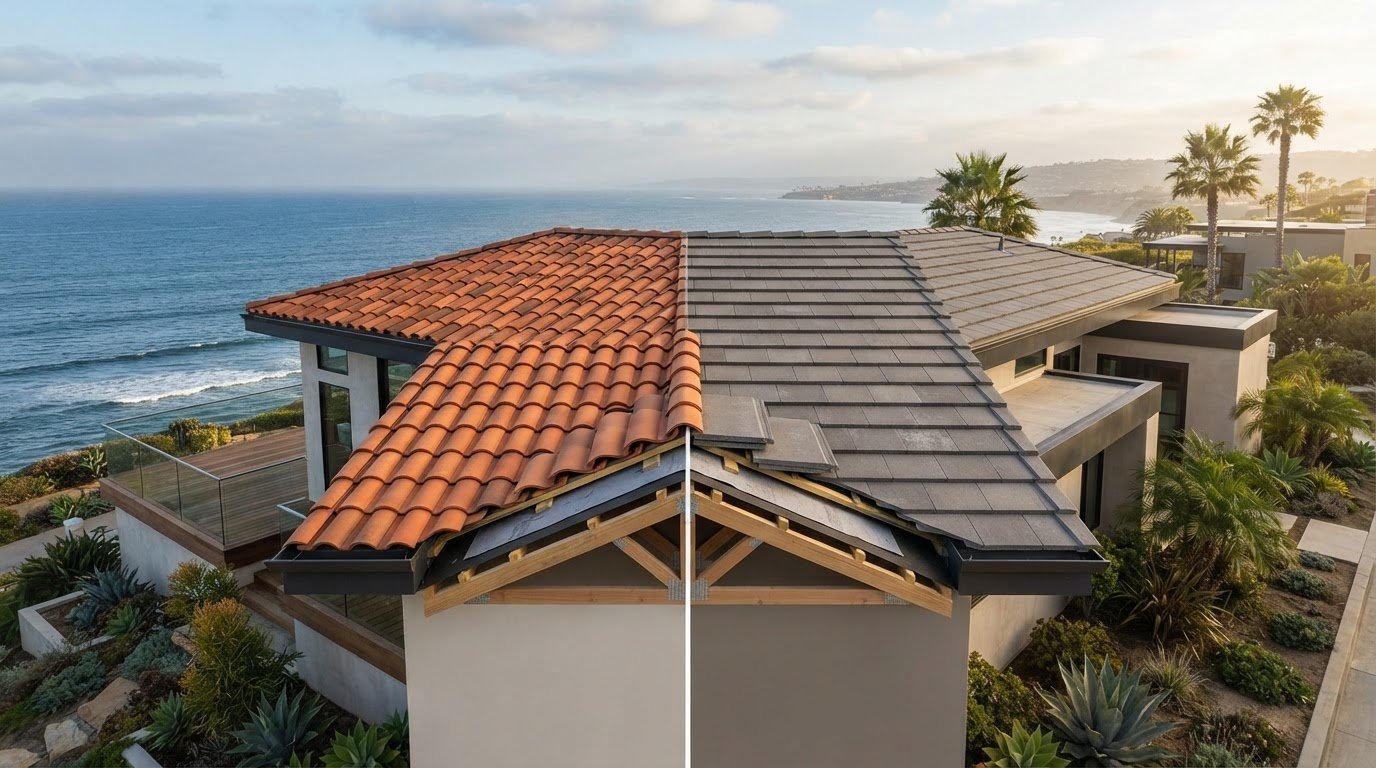
For Mediterranean-style homes or properties along the coast, clay and concrete tiles are often the superior choice. Unlike metal or wood, clay tile roofing is naturally resistant to salt air corrosion, making it ideal for communities like La Jolla. You can choose between Concrete S Tile, which offers a classic wavy profile, or Flat Concrete Tile for a more contemporary, sleek appearance. These systems are incredibly heavy and durable, often outlasting the building itself if the underlayment is properly maintained. Our ultimate guide to roof tiles provides a detailed comparison of these options. If you're unsure which material fits your neighborhood's specific climate, reaching out to a local roofing specialist can provide much-needed clarity.
Modern solutions for flat or low-slope roofs have also evolved. TPO (Thermoplastic Polyolefin) is a single-ply reflective membrane that is becoming the standard for commercial and contemporary residential flat roofs. It offers superior heat reflection compared to traditional Rolled Asphalt Torch Down roofing. While torch down is still a reliable, time-tested option for certain applications, TPO’s energy efficiency often makes it the preferred choice for a long-term roof replacement san diego investment. Each of these materials requires a specific installation technique to ensure a leak-free performance for decades to come.
Factors Influencing Roof Replacement Costs in San Diego
Every neighborhood in San Diego poses different logistical hurdles. If you live on the winding, narrow streets of La Jolla, getting heavy equipment and materials to your property requires meticulous planning. These logistical challenges, along with the complexity of your home's architecture, are primary drivers of your final estimate. When planning a roof replacement san diego homeowners should expect a detailed breakdown of how these factors influence the labor required. A home with multiple gables or a steep pitch will naturally require more time and specialized safety measures than a simple ranch-style roof.
Removing existing layers, known as the "tear-off" process, is another critical variable. Per California building codes, if your roof already has two or more layers of old material, they must be completely removed before a new system is installed. This isn't just a matter of labor; it involves significant disposal fees and ensures your home's structure isn't supporting excessive weight. In 2026, material price fluctuations and a shift in insurance policies towards "actual cash value" (ACV) coverage mean homeowners may face higher out-of-pocket expenses. It's more important than ever to work with a contractor who provides transparent, fixed-price contracts to help you avoid home improvement scams.
Understanding Roof Pitch and Square Footage
Roofers measure your home in "squares," where one square equals 100 square feet. This is different from your home's interior square footage because it accounts for the actual surface area of the roof, including overhangs. The pitch, or steepness, of your roof also dictates the safety protocols required. Steep-slope projects require specialized harnesses and scaffolding, which increases the time and manpower needed for a safe installation. Additionally, homes in coastal areas often require an extra 5% to 12% investment for marine-grade flashing and fasteners to resist salt air corrosion over the long term.
Permits and Compliance Costs
Navigating local bureaucracy is a necessary part of a roof replacement san diego project. Permit fees vary significantly across the county. For a full tear-off within the City of San Diego, permit fees can reach $720 or more, whereas unincorporated areas of the county may be as low as $185. While these costs are unavoidable, investing in Title 24 compliant "Cool Roof" materials offers a strong long-term ROI. These materials reflect solar heat, significantly lowering your cooling costs and potentially qualifying you for energy efficiency incentives. A professional estimate will always include these compliance line items, along with necessary upgrades to ventilation and flashing, to ensure your new roof meets the 2026 standards.

How to Choose a San Diego Roofing Contractor
Finding the right partner for a roof replacement san diego project is about more than just comparing the lowest bids. It's about finding a team that prioritizes accountability and local expertise. Your first step should always be verifying a valid California C-39 roofing contractor license. This specific classification ensures the contractor has the specialized training required for complex roofing systems. Ask for proof of workers' compensation and general liability insurance. These documents protect you from liability and provide peace of mind during the construction phase. Local experience in San Diego, Carlsbad, and San Marcos is equally vital. A contractor who frequently works in these areas understands the specific municipal requirements and can navigate the permit process with ease.
Review the contractor’s portfolio for projects that match your chosen material. If you are interested in clay tile or TPO, ensure they have a proven track record with those specific systems. Insist on a detailed, written contract before any work begins. A professional agreement will include a clear project timeline, a payment schedule, and a specific list of materials to be used. Finally, evaluate the warranty. A reputable business provides a dual guarantee: one from the manufacturer for the materials and a separate workmanship warranty for the installation quality. This ensures your investment is protected from both material defects and human error.
The Importance of Local Expertise
San Diego’s unique microclimates mean a shingle roofing company must understand specific wind zones and uplift pressures. Coastal homes face different structural stressors than properties in the inland valleys. Choosing a business with a physical San Diego office helps you avoid "storm chasers" who often disappear after the rainy season ends. A local expert will handle the entire permit process for you, ensuring that every detail of your installation meets the latest 2026 building codes without any extra stress on your part.
Commercial vs. Residential Specialists
It is important to recognize that residential and commercial roofing require different skill sets. While shingles are the standard for most homes, TPO commercial roofing requires specific certifications and heat welding equipment. Flat roof systems demand a precise approach to drainage and membrane seams to prevent ponding water. Ensure your contractor is equipped for large scale commercial replacements and has the specialized crew needed for TPO or rolled asphalt torch down applications. If you are looking for a team that combines technical mastery with neighborly service, contact Higher Levels Roofing for a professional assessment of your property.
The Higher Levels Roofing Replacement Process
Choosing a partner for your roof replacement san diego project is a significant decision that impacts your home's safety and value for decades. We believe the process should be as transparent as the results. Our approach centers on a methodical, step-by-step timeline that begins with a meticulous site evaluation. We don't just look at the surface; we examine the structural integrity of your decking and the efficiency of your current ventilation. This thoroughness ensures that when the actual installation begins, there are no surprises that could delay your project or compromise the final result.
Protection of your property is our primary concern during the intensive tear-off phase. We treat your home with the same respect we would our own. Our crews utilize specialized tarps and plywood shielding to protect your landscaping, windows, and outdoor living spaces from falling debris. This proactive stance prevents damage to your prized garden or delicate patio furniture. Once the old materials are cleared, we perform a detailed inspection of the underlying wood. If we discover localized wood rot, which is common in older San Diego properties, we address it immediately to ensure your new asphalt shingles or clay tiles have a solid, healthy foundation.
What to Expect on Installation Day
Installation day is an active, focused environment. While some noise is inevitable during a roof replacement san diego, we prioritize clear communication to minimize the disruption to your daily routine. Our project leads provide regular updates, informing you of our progress and any technical findings. We manage logistics carefully, ensuring that our equipment and materials don't block your access or inconvenience your neighbors. Cleanliness is a core value of our "Higher Levels" standard. We don't wait until the end of the week to tidy up; we perform daily cleanups and use high-powered magnetic sweeps to recover every stray nail from your driveway and lawn.
Long-Term Support and Warranties
Our relationship with you doesn't end when the last tile is laid. We provide a final quality control walkthrough to ensure every seam in your TPO membrane or every course of your concrete tile meets our rigorous craftsmanship standards. You will receive a comprehensive documentation package that outlines both the manufacturer’s material warranty and our own workmanship guarantee. This dual-layer protection ensures you are covered against both material defects and installation errors. We also provide specific maintenance advice tailored to your microclimate, helping you maximize the lifespan of your investment. If you are ready to secure your home’s future, you can schedule your free San Diego roofing estimate today to begin your professional consultation.
Secure Your Investment and Your Peace of Mind
Your roof represents the first line of defense against the elements. In our unique Southern California climate, it's a vital component of your home's energy efficiency. By selecting materials that meet the 2026 Title 24 standards and resist local stressors like salt air corrosion, you're making a strategic choice for your property's future. A successful roof replacement san diego project relies on technical precision and a commitment to quality that lasts long after the final walkthrough.
As a locally owned and operated C-39 contractor with a 5-star reputation, Higher Levels Roofing brings specialized expertise in tile, shingle, and TPO systems. We're fully licensed and insured, offering the reliability you expect from a neighborhood expert. We invite you to Schedule Your Free San Diego Roof Replacement Estimate with Higher Levels Roofing today. Let's work together to ensure your home remains a safe, beautiful sanctuary for years to come.
Frequently Asked Questions
How much does a roof replacement cost in San Diego in 2026?
The cost of a roof replacement in 2026 is determined by several local factors, including material choice, roof pitch, and the total square footage of the surface area. California's labor rates and strict Title 24 "Cool Roof" requirements also influence the total investment. While basic asphalt shingles are generally the most affordable option, premium clay or concrete tiles represent a higher upfront cost but offer superior longevity in our coastal environment.
How long does a typical roof replacement take in San Diego?
Most residential roof replacements in our area take between three and five business days to complete from start to finish. This timeline covers the initial tear-off, any necessary wood repairs, and the installation of the new materials. Larger commercial TPO projects or complex clay tile systems on multi-story homes may require seven to ten days. We prioritize a methodical pace to ensure every detail meets our high craftsmanship standards.
Do I need a permit for a roof replacement in San Diego County?
Yes, a building permit is required in San Diego for any project involving a full tear-off or if more than 25% of the roof is being replaced. These permits ensure that your new system complies with local fire safety and energy efficiency codes. Professional contractors typically handle the entire permit submission process for you. This ensures the project is legally documented and meets all structural requirements for your specific neighborhood.
What is a 'Cool Roof' and is it required in San Diego?
A "Cool Roof" is a system designed to reflect more sunlight and absorb less heat than a traditional roof. Since January 1, 2026, California's Title 24 energy standards have required these systems for most reroofing projects in San Diego County. Using these highly reflective materials helps reduce your indoor temperatures during the summer. This regulation also contributes to the overall climate resilience of our local community by lowering the strain on the power grid.
Can I install a new roof over my existing shingles?
California building codes typically require a full tear-off if your home already has two layers of roofing material. While a "roof-over" might seem like a way to save time, it adds significant weight to your home’s structure and prevents us from inspecting the underlying wood deck for rot. We usually recommend a complete removal to ensure a stable foundation for your roof replacement san diego project and to provide a long-term warranty.
What is the best roofing material for coastal homes in La Jolla or Carlsbad?
Clay tile is the most durable choice for coastal homes in La Jolla and Carlsbad because it's naturally resistant to salt air corrosion. Unlike metal or standard shingles, clay won't rust or degrade when exposed to the heavy marine layer. For homeowners who prefer a different look, high-quality concrete tile or specialized architectural shingles are also effective. These materials are engineered to withstand the unique microclimates found along the San Diego coastline.
Does Higher Levels Roofing offer financing for roof replacements?
Homeowners interested in financing should inquire about current options during their initial professional consultation. Many roofing projects in San Diego are funded through home equity lines of credit or specialized home improvement programs. We recommend discussing your budget and payment preferences early in the process. This allows us to find a solution that fits your specific financial goals while ensuring your home gets the protection it needs without delay.
How do I know if I need a full replacement or just a repair?
A full replacement is usually necessary when more than 30% of the roof is damaged or if the materials have exceeded their functional lifespan. Minor issues like a single leak or a few missing shingles can often be addressed with a targeted repair. However, if your shingles are brittle or your tile underlayment is over 25 years old, a complete roof replacement san diego is the more secure investment. We provide detailed inspections to help you decide.


Comments