


Annual Roof Maintenance Checklist for California: Spot Roof Wear

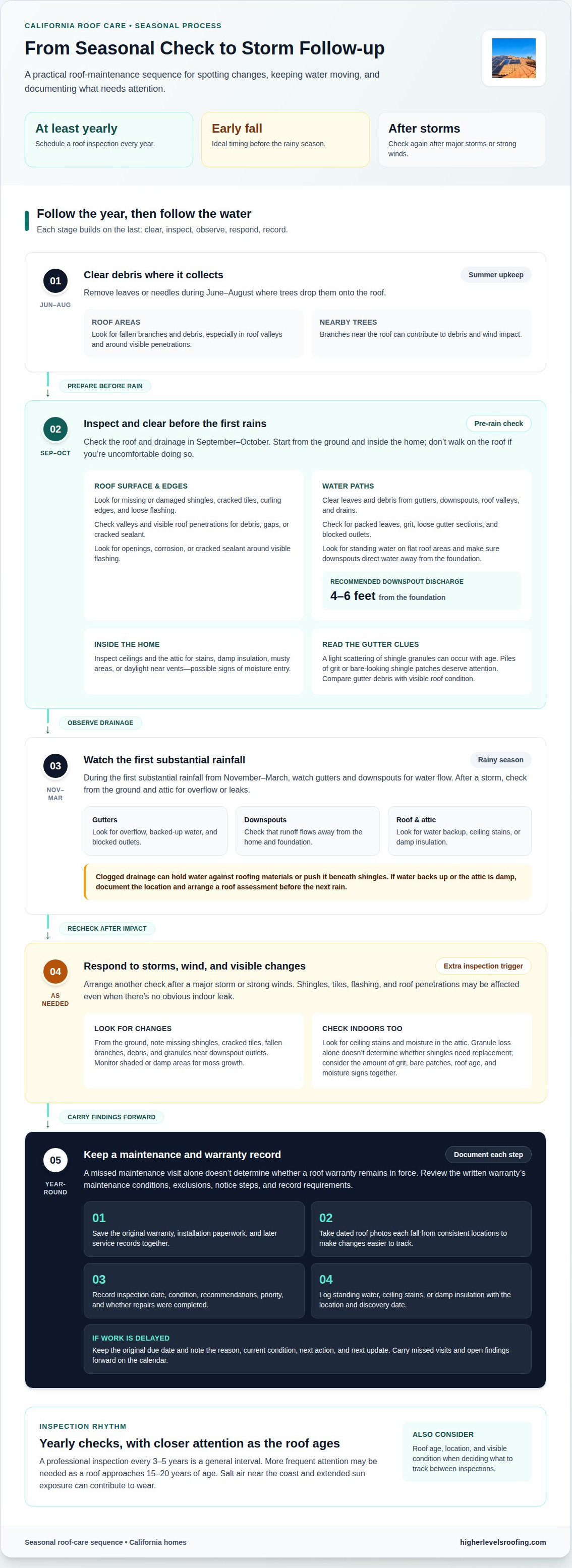
A yearly roof check is more than a seasonal chore. An annual roof maintenance checklist for California homes starts with an inspection at least once a year, ideally in early fall before the rainy season. Check again after a major storm or strong winds, when damage may not be visible indoors.
It’s easy to focus on visible leaks, but small clues matter too. Granules in gutters may signal shingle wear, while blocked roof drains can leave water with nowhere to go. This checklist covers what to look for around the roof, gutters, flashing, and attic, and when to clear drains before rain arrives. It also explains why maintenance records and your roof warranty’s terms deserve attention. Regular inspections can help you spot changes early and decide when to arrange a closer professional assessment.
Table of Contents
How often should a roof be inspected in Southern California?
Schedule a roof inspection at least once a year, ideally in early fall before Southern California’s rainy season. A spring check can reveal winter damage and help identify repairs before summer heat. Arrange another inspection after a major storm or strong winds, since shingles, tiles, flashing, and roof penetrations may be affected even when there’s no obvious indoor leak.
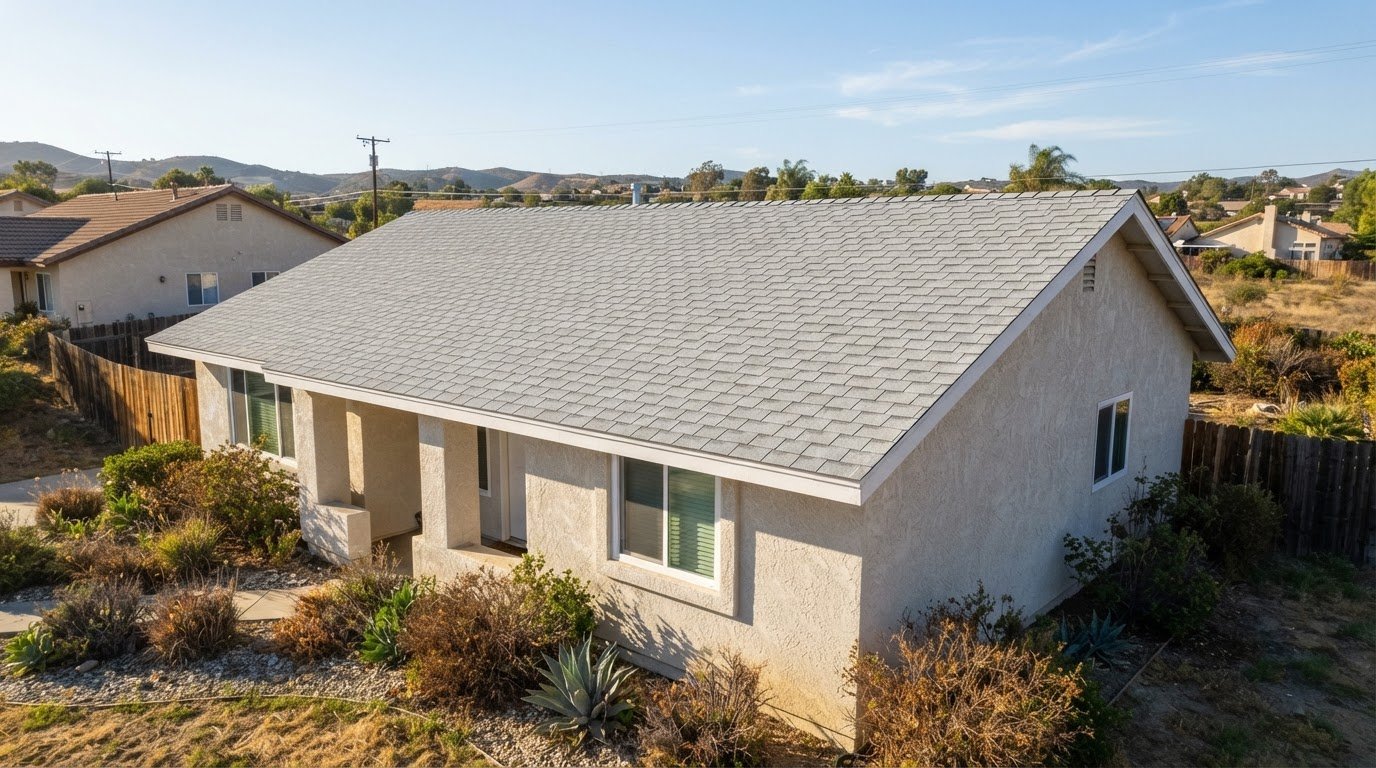
An annual roof maintenance checklist California homeowners can use should account for the roof’s age, location, and visible condition. A professional inspection every 3-5 years is a general interval, with more frequent attention as a roof approaches 15-20 years of age. Salt air near the coast and extended sun exposure can contribute to wear.
Use this annual roof maintenance checklist California homeowners can keep as a record of changes between inspections. Check from the ground and inside your home; don’t walk on the roof if you’re uncomfortable doing so.
Look for missing or damaged shingles, cracked tiles, curling edges, and loose flashing; these can leave roof areas exposed to moisture.
Check roof valleys and visible penetrations for debris, gaps, or cracked sealant that could let water collect or enter.
After wind or rain, look for fallen branches and debris, then monitor shaded or damp areas for moss growth.
Inspect ceilings and the attic for stains, damp insulation, or daylight near vents, which can indicate moisture entry.
To check for leaks or damaged materials, start with a visual inspection from the ground, then look for ceiling stains and moisture in the attic. Note cracked tiles or missing shingles without climbing onto the roof.
California homeowners generally need a current Contractors State License Board license for work requiring a permit, using employee labor, or costing at least $1,000 in combined labor and materials, according to the California Contractors State License Board.
Roof checks are separate from multifamily exterior elevated-element inspections. Under California SB 721, qualifying rental buildings with three or more units generally had an initial inspection deadline of January 1, 2026; later inspections are generally required every six years.
What does granule loss in the gutters mean?
Shingle granules protect the roof surface from sun exposure. A light scattering in the gutters can occur with age, but piles of grit or bare-looking patches on shingles deserve attention. Compare the gutter debris with the roof’s visible condition from the ground. Granules near downspout outlets can show where runoff carries material, while faded or curling shingles may indicate broader wear.
Before winter rains, clear leaves and debris from gutters, downspouts, roof valleys, and drains. Clogged drainage can hold water against roofing materials or push it beneath shingles. Check that downspouts direct water away from the foundation. A recommended discharge distance is 4-6 feet from the foundation.
Inspect gutters and downspouts for packed leaves, grit, loose sections, and blocked outlets; clear obstructions so water can flow.
Check roof valleys for debris that could dam runoff, and look for standing water on flat roof areas.
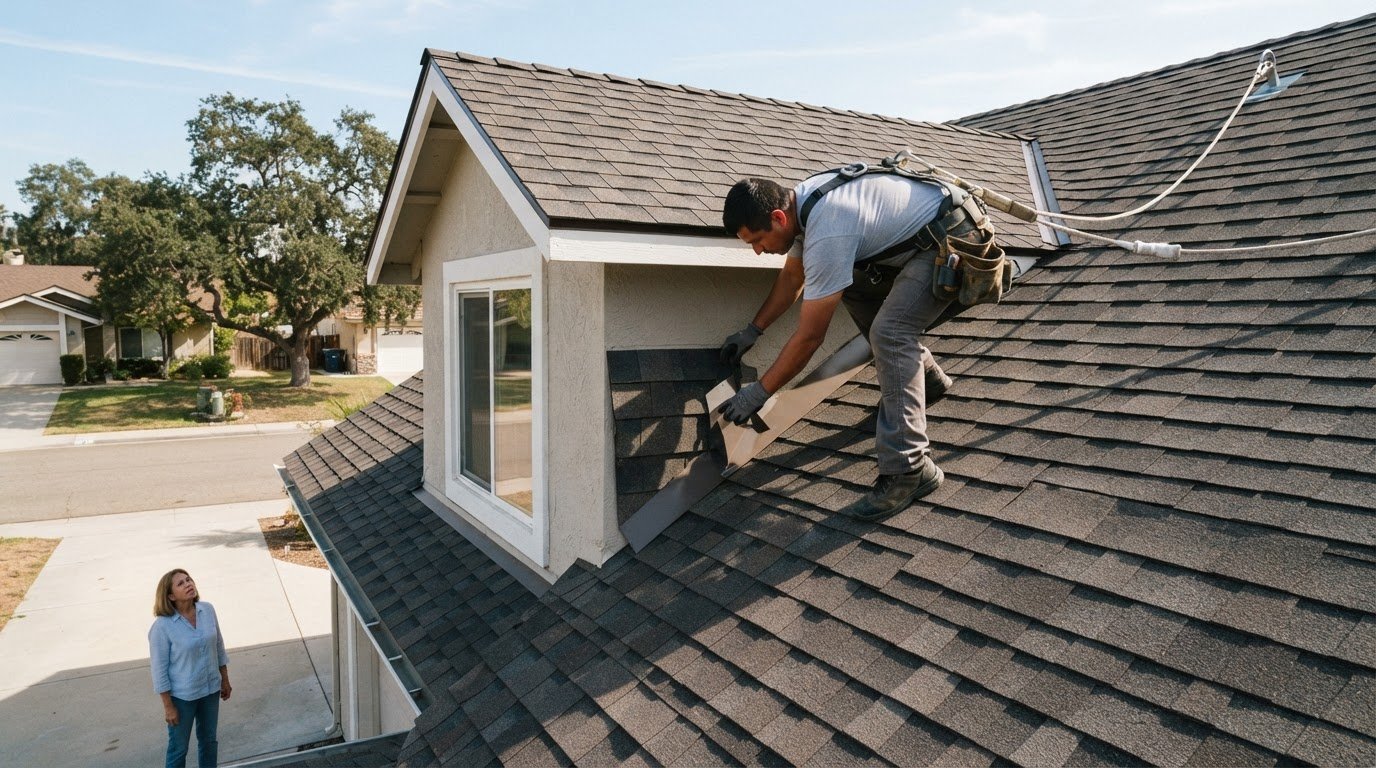
Examine visible flashing around roof edges and penetrations for openings, corrosion, or cracked sealant that may admit moisture.
Look for tree branches near the roof; nearby branches can contribute to debris and wind impact.
Review the attic and upper ceilings for damp insulation, stains, or musty areas that may point to a leak.
In Southern California, prepare for the first rains by checking these areas in September-October. During June-August, remove leaves or needles where trees drop them onto the roof. Watch gutters and downspouts during the first substantial rainfall from November-March, then check for overflow or leaks from the ground and attic after a storm.
Granule loss alone doesn’t determine whether shingles need replacement. The amount of grit, visible bare patches, roof age, and signs of moisture together offer a clearer picture. If water backs up, flashing has opened, or attic insulation is damp, document the location and arrange a roof assessment before the next rain.
Does skipping maintenance void a roof warranty?
Missing a maintenance visit doesn’t by itself determine whether a roof warranty remains in force. Review the written warranty’s maintenance conditions, exclusions, notice steps, and record requirements. Those terms explain what documentation matters and how the warranty addresses roof condition, repairs, and delayed maintenance.
Use a maintenance calendar to connect each inspection with its findings and next steps. For every roof section, record the inspection date, observed condition, recommended work, and relevant warranty conditions. If work is delayed, keep the original due date and note the reason, current condition, next action, and next update. This creates a clear record of the roof’s history.
Save the original warranty, installation paperwork, and later service records together; these documents identify the roof materials and applicable conditions.
Take dated roof photos each fall from consistent locations; matching views make changes in shingles, flashing, or debris easier to track.
After an inspection, record each recommendation, its priority, and whether repairs were completed; unresolved findings should remain visible on the calendar.
Log standing water, a ceiling stain, or damp insulation with its location and discovery date; these details help connect an observed issue to follow-up work.
Review scheduled and completed preventive visits monthly; carry missed visits or open findings forward rather than marking them complete.
Keep the maintenance calendar current through spring and summer, not just before winter rain. After roof service, record the work completed and any recommendations for further work. Attach dated photos, invoices, inspection notes, and correspondence to the same entry so every update has supporting documentation.
Budget for preventive inspections and repairs as part of property maintenance, then compare planned work with actual findings. For a rental property or a home with multiple roof sections, track each building or section separately. Consistent records support informed maintenance decisions and keep documentation organized for reviewing warranty coverage.
Scheduling roof and storm-drain clearing before Southern California's rainy season
Plan roof and storm-drain clearing before Southern California’s rainy season, leaving time to address concerns found during an inspection. For homes in the San Diego area, an early-fall check is a practical time to review roof condition and drainage before rain arrives. A spring review can also help identify weather-related wear and plan maintenance ahead of the next wet season.
Build the schedule around the property’s drainage layout, nearby trees, and roof condition. Clear roof valleys, gutters, downspouts, and storm-drain openings so leaves and debris don’t obstruct runoff. During rainfall, observe drainage from the ground. Note overflow, slow discharge, or standing water, then record the location for follow-up.
Remove leaves and branches from roof valleys and drains; debris can obstruct water flow.
Check gutters, downspouts, and exterior drain openings for blockages, then confirm runoff has a clear path away from the home.
As part of fire-season upkeep, clear dry leaves and needles from the roof. Ember-resistant vent screens use 1/16-inch mesh to block embers from entering attic spaces.
After a major storm, look from the ground and inside the attic for displaced materials, stains, or signs of water entry.
Record each visit, observed condition, and outstanding task to keep seasonal maintenance organized.
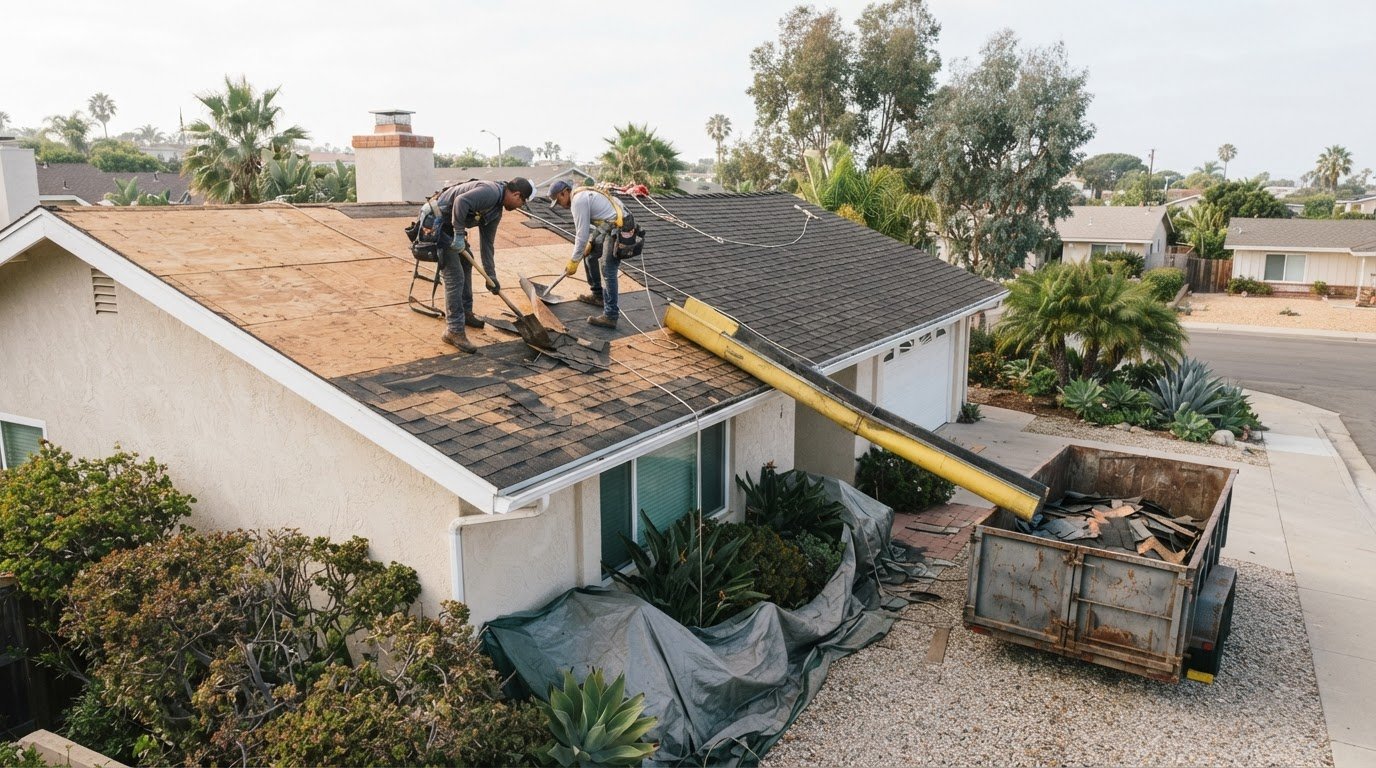
Use the spring inspection to document broader deterioration and identify which roof sections need attention. If the findings point to replacement, begin planning before the next rainy season. Timing and scope depend on the roof’s material, condition, drainage, and required work.
If your inspection reveals significant wear, discuss roof replacement options before rain creates added concerns. A planned conversation can help you understand the next step for your roof.
Higher Levels Roofing: Roof Repair Services
Higher Levels Roofing provides roof repair services when an inspection reveals damaged shingles, cracked tiles, or other roofing concerns that need attention. Addressing visible wear early can help you plan a practical next step for your roof.
Higher Levels Roofing offers asphalt shingle roofing, flat concrete tile roofing, and concrete tile roofing. The right approach depends on the roof material and the condition of the affected area. Sharing your inspection notes, photos, and maintenance records can help clarify what you’ve observed.
If your roof needs repairs or you’re weighing the next step after an inspection, contact Higher Levels Roofing to discuss your roofing needs.
Make Your Next Roof Decision With Confidence
An annual roof maintenance checklist for California homes can become a practical record, not just a seasonal reminder. Use it to track what changes, what needs attention, and which decisions can wait. This ongoing view helps you plan deliberately rather than react to concerns without context.
If your notes point to damaged roofing materials or a need for repairs, Higher Levels Roofing can help with the next step. Contact the team to discuss roof repair and the condition you’ve documented. Clear observations and photos can make the conversation more useful.
Contact Higher Levels Roofing about roof repairs when you’re ready to talk through your roof’s needs. A considered next step can help you move forward with greater clarity and care.
Frequently Asked Questions
How do I keep moss and algae off a shingle roof?
Limit shade and trapped moisture to make roof surfaces less inviting to moss and algae. Keep branches trimmed and clear leaf buildup before it stays damp. For roof growth treatment, ARMA describes a 50/50 mix of laundry-strength liquid chlorine bleach and water. Follow product directions and protect surrounding plants. Avoid aggressive scrubbing, which can disturb shingle granules and leave roofing material more exposed. Homeowners seeking guidance on gentle moss treatments and exterior washing can also review professional resources like soclean.ca to understand safe cleaning practices.
Is it safe to walk on my own roof to inspect it?
Inspect from the ground if you’re not comfortable walking on the roof. Binoculars can help you see shingles, tile edges, and roof penetrations without climbing. A wet surface, steep slope, or fragile roofing material can make access especially risky. You can also check the attic and ceilings for signs of leaks. Leave roof access to a professional when the surface or conditions feel unsafe.
When should I check my roof in San Diego?
In San Diego, schedule a roof check in early fall before the rainy season, and consider a spring review after winter weather. A fall visit gives you time to note concerns before rain returns. A spring check can reveal damage that may have been less visible during wet weather. Also check after a major storm or strong winds, particularly if you notice new indoor stains.
What should an annual roof maintenance checklist include?
Record the roof’s material, visible condition, and any areas needing follow-up. Note the location of damaged shingles or tiles, flashing concerns, and signs of moisture around vents. Add dated photographs from consistent viewpoints and keep inspection notes with warranty documents. This creates a useful reference for comparing changes over time and tracking whether recommended work has been completed.
When is the best time to inspect and maintain a roof in California?
Choose a dry period before the rainy season, then adjust the timing to local weather and the roof’s condition. In Southern California, early fall is useful for preparing for rain, while a spring review can help identify winter wear. After a major storm, look for visible changes from the ground and check indoor areas for signs of water entry.
How much does annual roof inspection and maintenance cost in California?
The cost depends on the roof’s size, materials, access, condition, and required work. A roof needing repairs has a different scope from one requiring only an inspection. For roofing work, pricing depends on the specific project and is provided after a quote request. Sharing the roof type and documented concerns helps describe the project’s needs.
Comments