


Clay or Concrete Roof Tiles in San Diego: Compare Cost and Durability

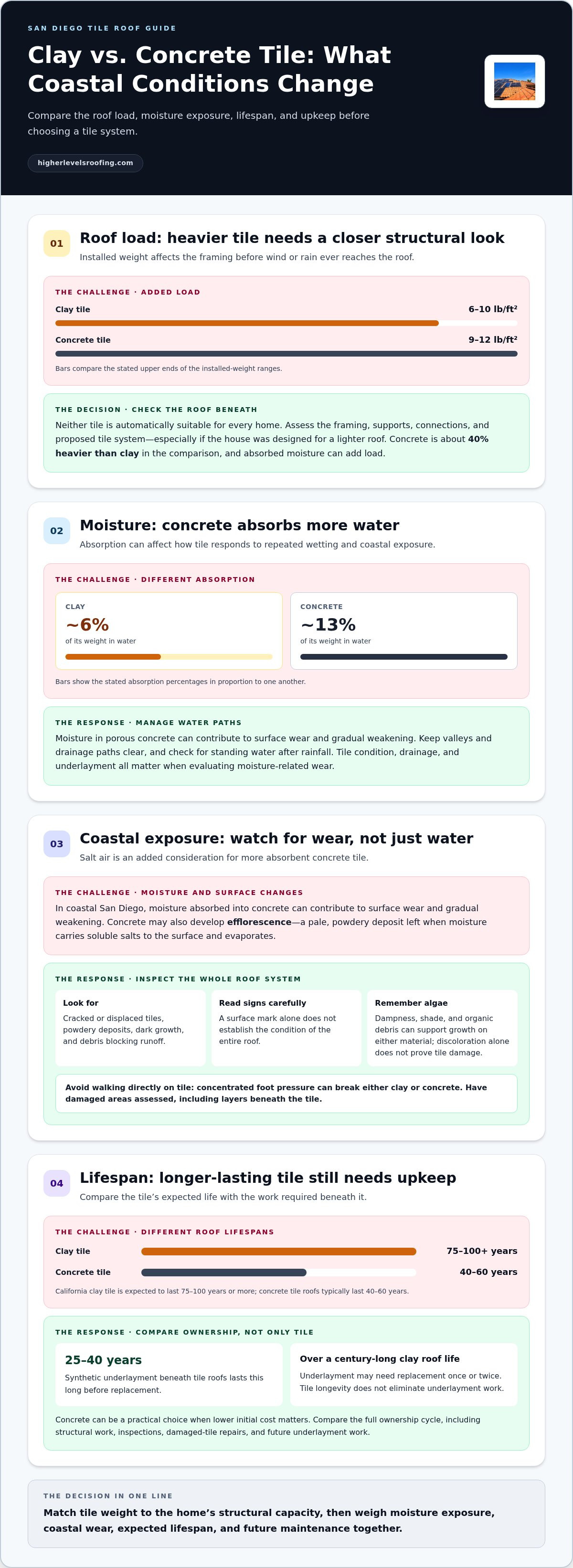
Clay has the durability advantage in San Diego’s coastal conditions, while concrete is heavier and absorbs more moisture. For clay tile vs. concrete tile durability in San Diego, the key difference is that clay absorbs about 6% of its weight in water, compared with about 13% for concrete. California clay tile roofs are expected to last 75-100 years or more; concrete tile roofs typically last 40 to 60 years.
Concrete can still be a practical choice, especially when its lower initial cost matters. But tile weight, moisture exposure, and the roof structure all affect how well a material performs over time. In coastal San Diego, salt air is another consideration: moisture absorbed into concrete can contribute to surface wear and gradual weakening.
This comparison explains how clay and concrete tiles differ in weight, water absorption, coastal resistance, lifespan, and long-term ownership costs. It also covers why the roof beneath the tiles matters and how to weigh the trade-offs for a San Diego home. The right option depends on the building as well as the tile.
Table of Contents
Tile weight and structural reinforcement
Roof tile weight affects structural load before a tile roof ever faces wind or rain. Installed clay tile weighs 6 to 10 pounds per square foot, compared with 9 to 12 pounds per square foot for concrete. That difference matters across an entire roof: the framing must carry the tiles, underlayment, and other roofing components together.
Clay tiles are lighter, but neither material is automatically suitable for every San Diego home. A home designed for lighter roofing may need a structural evaluation before tile installation. A qualified assessment considers the roof framing, supports, connections, and proposed tile system, rather than judging capacity by appearance alone.
Concrete tile is about 40 percent heavier than clay tile in the provided comparison. It is also more absorbent, so moisture can add load. For a house originally designed for another roof type, that combined weight makes structural capacity a key part of the material decision.
Can existing San Diego homes support tile? Some can, but suitability depends on the roof’s structural capacity and the selected tile system. If the home wasn’t originally designed for tile roofing, a structural analysis is a practical first step.
What permits and building codes apply? Permit requirements depend on the project and local jurisdiction. In California wildfire-urban interface zones, Chapter 7A of the California Building Code sets Class A roofing as the minimum; clay and concrete tiles have Class A fire ratings under ASTM E108 testing.
What maintenance and repairs do tiles need? Clay and concrete tiles have moderate impact resistance and can crack from hail. Include inspections and replacement of damaged tiles in roof upkeep, and assess the underlayment as a separate part of the roofing system.
How long does tile underlayment last? Synthetic underlayment beneath tile roofs lasts 25 to 40 years before replacement. Over a clay tile roof’s century-long lifespan, the underlayment may need replacement once or twice, so tile longevity doesn’t eliminate underlayment work.
Choose between clay and concrete only after weighing the installed load against the home’s framing. In a clay tile versus concrete tile durability comparison in San Diego, structural capacity is an early decision point, not a finishing detail.
Water absorption and algae growth
Clay and concrete differ in how much water they absorb: clay takes in about 6% of its weight, while concrete absorbs closer to 13%. That difference can affect a tile roof after repeated wetting, especially where water remains on the surface or enters porous material. Absorption is only one part of durability, but it helps explain why the two roofing materials can respond differently to moisture over time.
Concrete’s greater absorption can contribute to cracking and efflorescence. Efflorescence is a pale, powdery deposit that forms when moisture carries soluble salts to a tile’s surface and evaporates. It may appear on individual concrete tiles, but a surface mark alone doesn’t establish the condition of the whole roof. Tile condition, drainage, and underlayment all matter when assessing moisture-related wear.
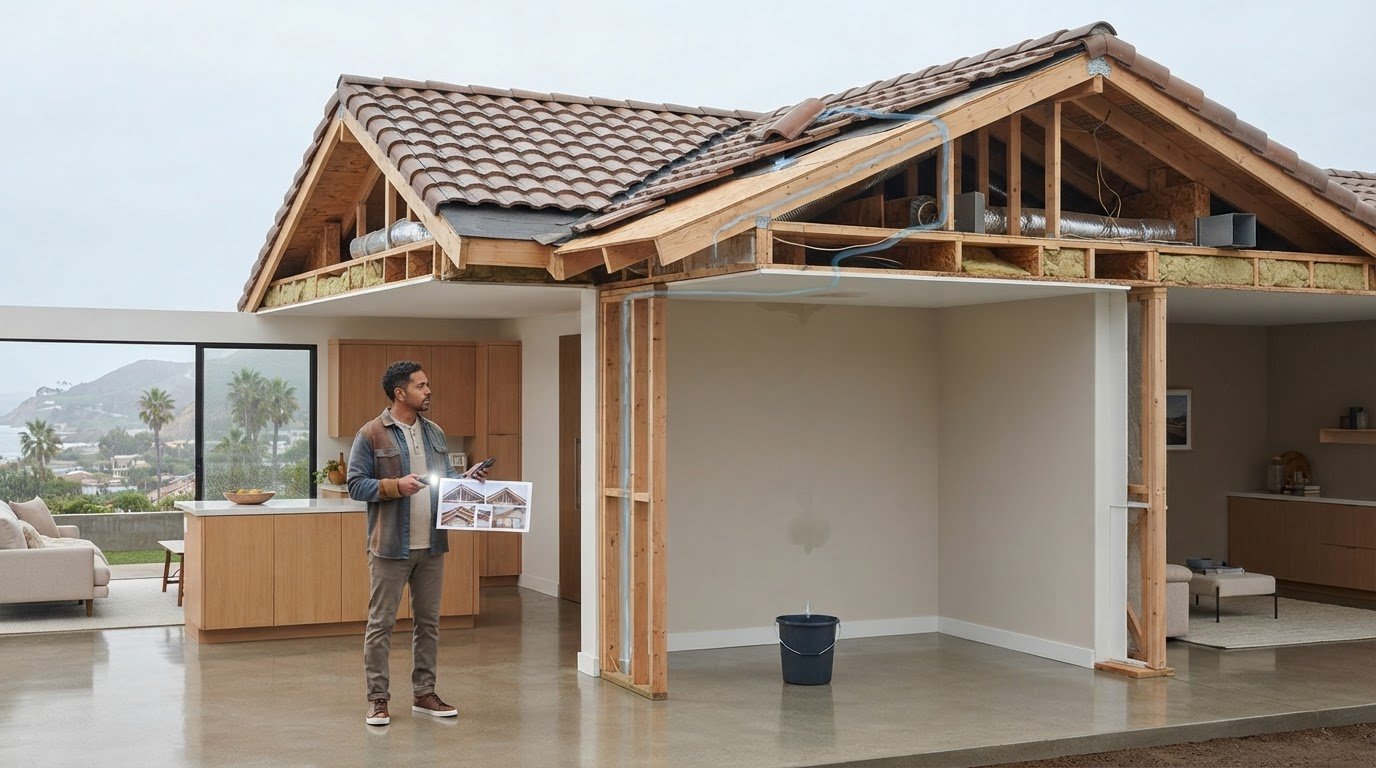
San Diego’s seasonal rain can expose weak drainage details. During a heavy, monsoon-style downpour, water should run across the roof and exit through clear drainage paths rather than pooling around valleys, penetrations, or debris. The word “monsoon” describes an example of intense rain here, not a claim about San Diego’s usual weather. Check for blocked valleys and visible standing water after rainfall; lingering moisture can increase exposure for more absorbent concrete tile.
Algae growth is a separate surface concern from water absorbed into the tile. Dampness, shade, and organic debris can create favorable conditions for algae on either material. For example, a shaded roof slope beneath overhanging branches may stay damp longer than a sun-exposed slope. Algae can discolor tiles, but its presence alone doesn’t prove that a tile has cracked or lost its protective function.
Use a careful inspection rather than aggressive cleaning. Look for cracked or displaced tiles, powdery deposits, dark surface growth, and debris blocking runoff. Keep drainage paths clear, and have damaged areas assessed so repairs address the tile and any affected layers beneath it. Avoid walking directly on tiles: concentrated foot pressure can break either clay or concrete.
For homeowners weighing a lifespan that may reach 100 years with clay, moisture management remains important even when the tile itself lasts for decades. The tile, roof slope, shading, drainage, and underlayment work together as one roofing system. Compare those conditions on the actual home, not just the material labels. A moisture-aware inspection can help identify whether surface algae is cosmetic or whether cracking and drainage problems need attention before they spread.
Budget and long-term ownership considerations
Compare the full ownership cycle, not just the initial material choice. Installation details, roof profile, structural work, and future underlayment needs all affect the decision.
Tile warranties range from 50 years to the life of the structure. The warranty document defines whether cracking, fading, or weather damage is covered, and what exclusions apply.
Clay Tile Lifespan
Clay tile roofs in California are expected to last 75-100 years or more. That longer service life can make clay appealing for homeowners planning to stay in a home for decades, including properties with a historic or Spanish profile. Compare the tile’s expected lifespan with the roof’s underlayment needs, since long-lasting tile doesn’t mean every roofing layer lasts equally long.
Concrete Tile Lifespan
Concrete tile roofs in California typically last 40 to 60 years. Concrete tile roofing generally has a lower initial cost than clay, but its shorter expected lifespan changes the long-term comparison. Its surface color can also fade over 15 to 20 years, while clay’s fired-ceramic color is described as permanent. Include appearance as well as replacement timing in the ownership decision.
For homeowners asking how long concrete roof tiles last in San Diego, the California estimate is 40 to 60 years. The roof’s condition and maintenance influence how ownership unfolds, so consider the tile, underlayment, and repair needs together rather than treating tile lifespan as the only measure.
Build a comparison around these practical factors:
Material and installation: Concrete’s lower initial cost can matter, while roof shape, tile profile, and installation complexity also influence the project budget.
Roof structure: Structural work may affect the overall decision if the home needs preparation for tile roofing.
Future work: Synthetic underlayment beneath tile roofs lasts 25 to 40 years before replacement, creating a maintenance consideration within either tile’s service life.
Alternative roofing: Asphalt shingles last 15 to 25 years, so compare their shorter replacement cycle with tile’s longer ownership horizon.
A Spanish barrel profile may suit a home’s architecture, while a flatter profile creates a different visual effect. Match the look to the home, but also consider roof structure, material, and expected upkeep. For a historic house, preserving its character may be part of the decision alongside lifespan and installation requirements.
When comparing clay and concrete, consider which roof layers may need attention during your intended ownership period. Clay’s longer tile lifespan may involve underlayment replacement once or twice over a century-long lifespan. Concrete’s lower initial cost may appeal when upfront budget matters more. Either way, plan for repairs and underlayment, not just the tiles.
Concrete tile porosity and coastal salt-air exposure
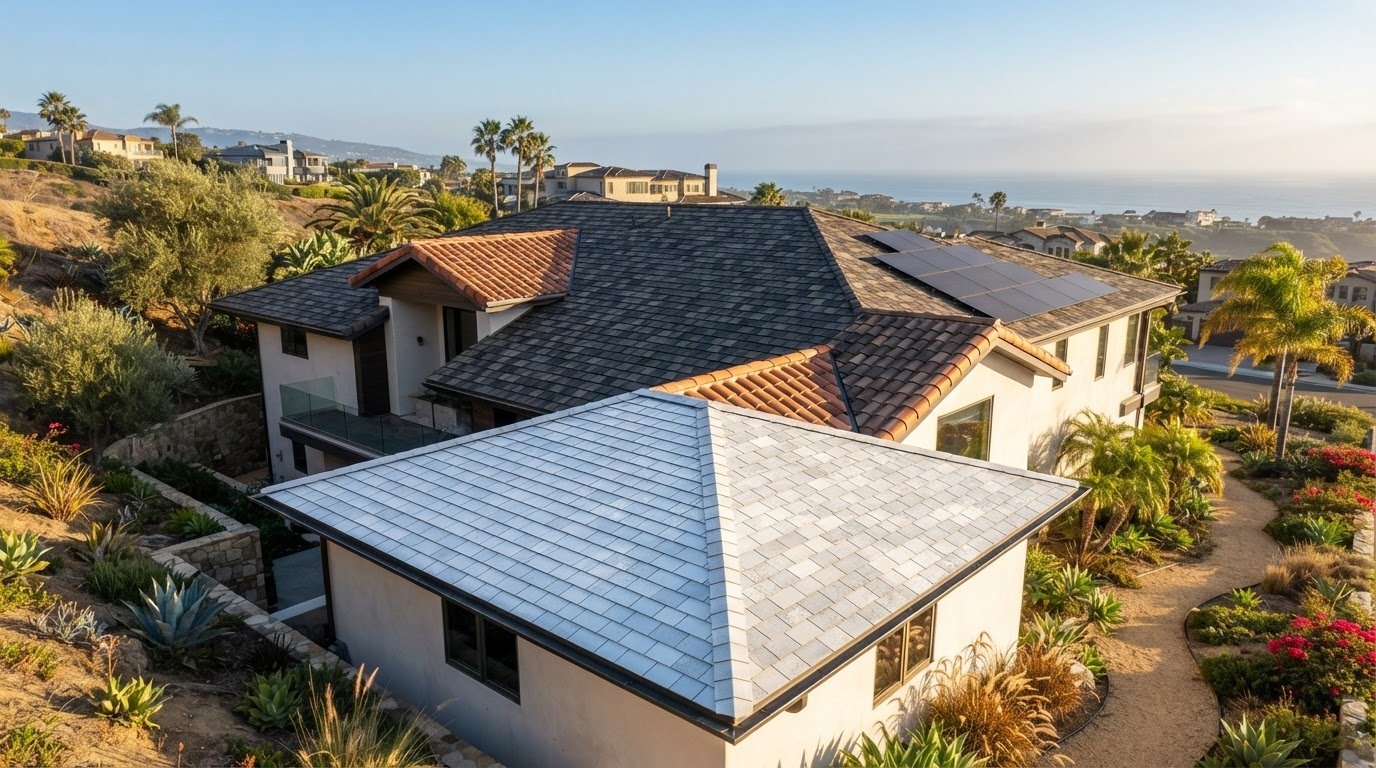
In San Diego, both clay and concrete tiles face sun, heat, coastal air, and occasional heavy rain. Concrete tile can absorb moisture, and coastal conditions may contribute to surface wear over time. Clay is less absorbent and resistant to UV damage, so the materials respond differently to the local climate.
Porosity matters because moisture can enter concrete tile rather than remain only on its surface. Along the coast, salt air adds a particular concern: it accelerates deterioration in concrete. A concrete tile roof near the shoreline may develop surface pitting or erosion over time. Progressive wear deserves attention because it can weaken the tile itself.
Clay tile roofing offers a contrasting material choice. Its lower moisture absorption can reduce the water held within a tile, while fired clay resists UV damage. That doesn’t make clay tile roofs immune to weather-related wear: cracks, movement, and drainage issues still matter. Compare the condition of each roof area, especially exposed slopes and edges.
Sun affects appearance as well as material condition. Concrete tile color may fade over 15 to 20 years of UV exposure, while clay’s fired-ceramic color is described as permanent. On a San Diego roof with direct sun, fading can change the appearance without proving that the concrete tile has failed structurally. Assess visible color changes separately from cracks, pitting, and erosion.
Heavy rain tests a roof’s drainage details. Check valleys, roof-to-wall transitions, and areas where leaves can obstruct runoff. Water should move off the tile surface rather than collect around debris or damaged sections. After a downpour, note any visible pooling and look from a safe vantage point for displaced or cracked tiles. These observations help distinguish drainage concerns from surface weathering.
For a useful coastal inspection, record the location and type of each visible concern:
Concrete surface: Note pitting, erosion, or pale deposits that may indicate efflorescence.
Clay surface: Look for cracked or displaced tiles, even though clay resists UV damage.
Roof drainage: Identify debris or areas where water appears to linger after rain.
Sun exposure: Compare fading on exposed slopes with shaded sections of the same roof.
These observations help homeowners compare tile roofing based on the home’s actual exposure, not material labels alone. A coastal concrete roof may need closer attention to surface deterioration, while a clay roof still needs inspection for cracks and drainage problems. In either case, the tile, roof layout, and maintenance history shape performance through San Diego’s changing weather.
How long do clay roof tiles last in San Diego?
Clay tile roofs in California are expected to last 75-100 years or more. That long service life makes clay a durable roofing choice, but it describes the tile, not every layer beneath it. For homeowners planning around a roof’s lifespan, the distinction between tile condition and the full roofing system matters.
Clay’s durability comes from material qualities that resist several common forms of deterioration. Clay roof tiles resist rot, insects, and UV damage. Their fired-ceramic color is described as permanent, unlike concrete tile color, which may fade over 15 to 20 years of UV exposure. That can help preserve a roof’s appearance as the home ages.
A roof can need work before its clay tiles reach the end of their expected lifespan. Underlayment beneath tile may need replacement once or twice over a clay tile roof’s century-long lifespan. The tiles may remain serviceable while the water-shedding layer beneath them needs attention. Plan for both components.
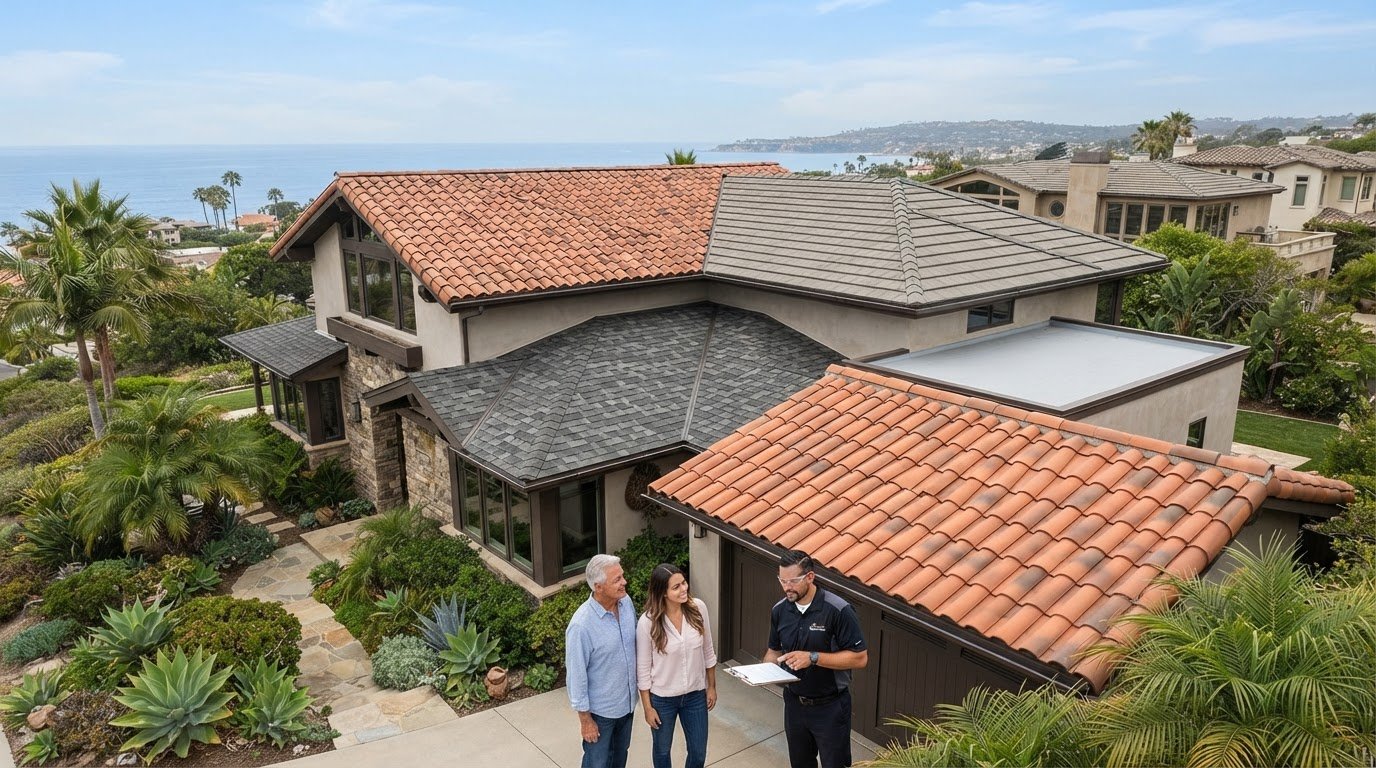
For a San Diego home, assess the roof as a system rather than judging its age by the visible tiles alone. An inspection can distinguish surface condition from underlayment condition and identify areas needing attention. Local sun exposure and coastal conditions also make it useful to compare exposed roof areas with more sheltered sections.
For comparison, concrete tile roofs in California typically last 40 to 60 years. Clay’s expected lifespan is longer, but the useful comparison includes the roof’s upkeep and appearance, not only the tile’s replacement date. Concrete’s lower initial cost may suit a different budget priority, while clay can appeal to homeowners seeking a longer-lived tile surface.
Check tile condition: Look for cracked, displaced, or visibly deteriorated tiles.
Consider the layers: Include underlayment needs in long-term planning, even when clay tiles remain intact.
Review installation: Proper installation is part of the stated 75-100-year-or-more expectation for clay tile roofs.
These steps help distinguish a tile repair from work needed beneath the tile. A roof with intact clay tiles can still need underlayment work, while damaged tiles may need attention sooner. Assessing both the visible surface and underlying system gives homeowners a clearer basis for planning maintenance and comparing materials.
For a project-specific discussion of tile choices and roof condition, start a roofing conversation.
Clay and concrete tile roofs can last 50 to 100 years or more. That broad span is useful as a general comparison, not a promise for an individual roof. For planning, keep the tile surface and the layers below it in view, and use the roof’s observed condition to guide decisions. A material’s stated lifespan can help set expectations, while inspection findings can help clarify what work is relevant to the home.
Higher Levels Roofing: Asphalt Shingle Roofing
Higher Levels Roofing helps homeowners compare roofing materials and plan installations, replacements, and repairs around their home’s needs. If tile weight, moisture exposure, or maintenance demands affect your decision, the company offers Flat Concrete Tile Roofing, Concrete S Tile Roofing, and Clay Tile Roofing. Asphalt Shingle Roofing is another option to consider. The right direction depends on the roof’s structure, condition, and the look you want to preserve. Contact Higher Levels Roofing to discuss your roof and material options.
Choose the Roofing Path That Fits Your Home
The next step is to turn your material preferences into a plan for the specific roof, its architecture, and how you use the home. Deciding between clay tile and concrete tile durability in San Diego is also an opportunity to consider whether tile remains the right choice or another roofing material better suits your priorities.
Higher Levels Roofing offers Flat Concrete Tile Roofing, Concrete S Tile Roofing, and Asphalt Shingle Roofing. Discussing these options alongside your goals can help clarify the right direction for your project. Bring questions about appearance, future upkeep, and the roof’s current condition to the conversation. A thoughtful choice starts with the home itself, not a one-size-fits-all rule.
Contact Higher Levels Roofing today to discuss your roofing plans. Take the next step with a clear view of the options, and choose a roof that feels right for your home.
Frequently Asked Questions
Clay vs Concrete Roof Tiles: What’s the Better Roofing Material?
Neither material is best for every San Diego home. Clay tile versus concrete tile durability in San Diego favors clay for lower water absorption and longer expected service life, while concrete may suit homeowners prioritizing a lower initial material cost. Key factors include roof structure, coastal exposure, architectural style, and plans for the property. Weigh them together rather than choosing by appearance or upfront budget alone.
How do clay and concrete roof tiles compare in durability, cracking, and weather resistance?
Both materials offer Class A fire ratings under ASTM E108 testing, but neither is immune to impact damage. Hail can crack either type, so visible damage should be assessed as part of the whole roof system, including nearby flashing and the water-shedding layers beneath the tiles. For a San Diego home, weigh fire performance alongside the specific exposure and roof details, rather than treating one rating as a complete measure of durability.
What are the installed costs of clay versus concrete roof tiles in San Diego?
Installed cost depends on the project and is provided after a quote request. The roof’s size, shape, access, existing materials, and any structural preparation affect the work involved. A quote for a home in San Diego, La Jolla, San Marcos, Encinitas, or Carlsbad should reflect the property’s scope, not a generic comparison. Compare the proposed work and material choice alongside the initial expense and anticipated ownership needs.
Which clay and concrete roof tile warranties cover cracking, fading, and weather damage?
Clay and concrete tile warranties range from 50 years to the life of the structure. The warranty document specifies whether cracking, fading, or weather damage is covered and lists exclusions.
Comments