


How to Fix a Sagging Roofline in San Diego: Causes, Repairs & Next Steps

Updated: Oct 28
A dip along your roofline may not be a roofing-surface problem. If you’re wondering how to fix sagging roofline San Diego homes may develop, it’s understandable to worry about safety or hidden damage. The right repair depends on the cause, which can’t be determined by appearance alone.
A visible dip may point to weakened roof framing, water-related deterioration, heavy roofing materials, or a fascia or ceiling issue that only looks like a roof problem. In San Diego, older homes with heavy tile and framing that may not have been designed to support it deserve careful assessment. Don’t climb onto the roof to investigate. From the ground, note where the dip appears, when you first noticed it, and whether you’ve seen leaks, stains, or changes inside the home.
This guide explains what a sagging roofline may indicate, how a roofing professional assesses the roof system, and what you can safely observe before an inspection. You’ll also learn how the cause and extent of the problem shape the next step, from a focused repair to more extensive work. Higher Levels Roofing provides residential and commercial roof repairs, installations, and replacements in the San Diego area, with the scope informed by the roof type and observed conditions.
Table of Contents
How to Recognize a Sagging Roofline on a San Diego Home
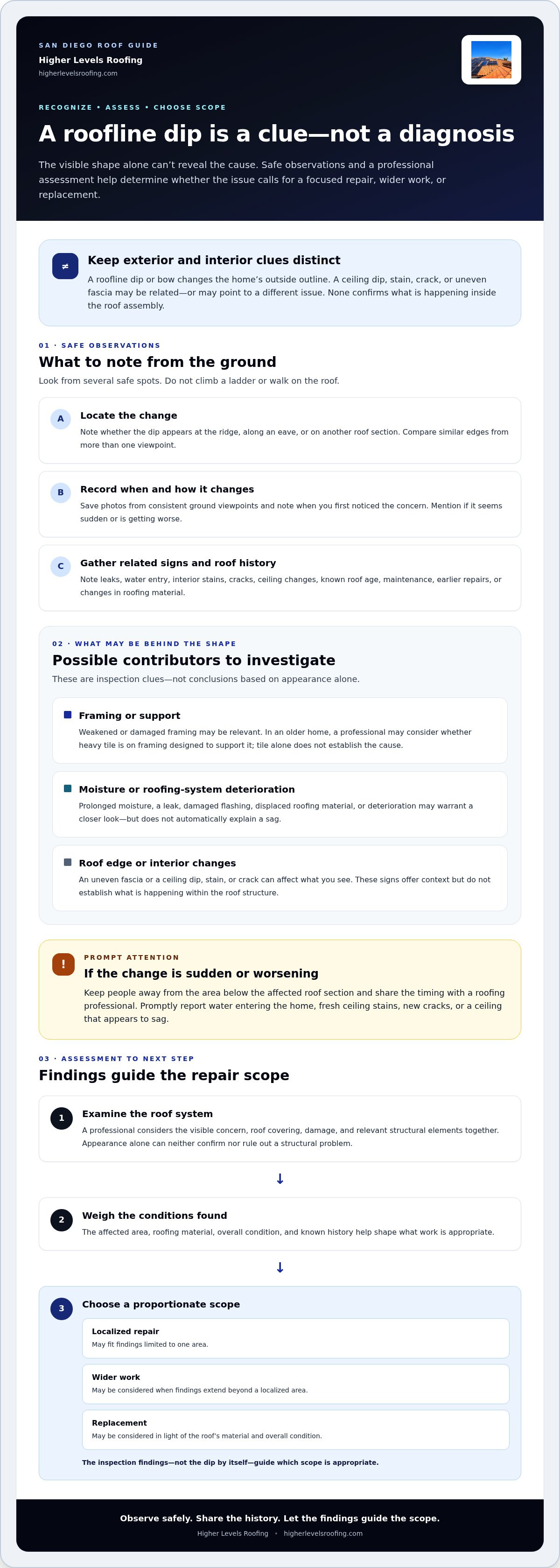
A sagging roofline is a visible dip, bow, or uneven stretch along the roof’s outside outline. It may appear at the ridge, where the two roof slopes meet, or along the eaves at the lower edges. A section that sits lower than the areas beside it, or looks out of line with the home’s other roof edges, is worth documenting and having assessed. The shape is a clue, not a diagnosis.
Consider the exterior and interior separately. A ceiling dip, stain, or crack inside the home is not the same as a change in the roof’s outline, although the observations may be related. A ceiling mark could indicate water entry, while an uneven fascia board may affect how the roof edge looks. Neither confirms what is happening inside the roof assembly. A professional assessment considers the roof’s visible form alongside its roof structures and components.
What does a sagging roofline look like from the ground?
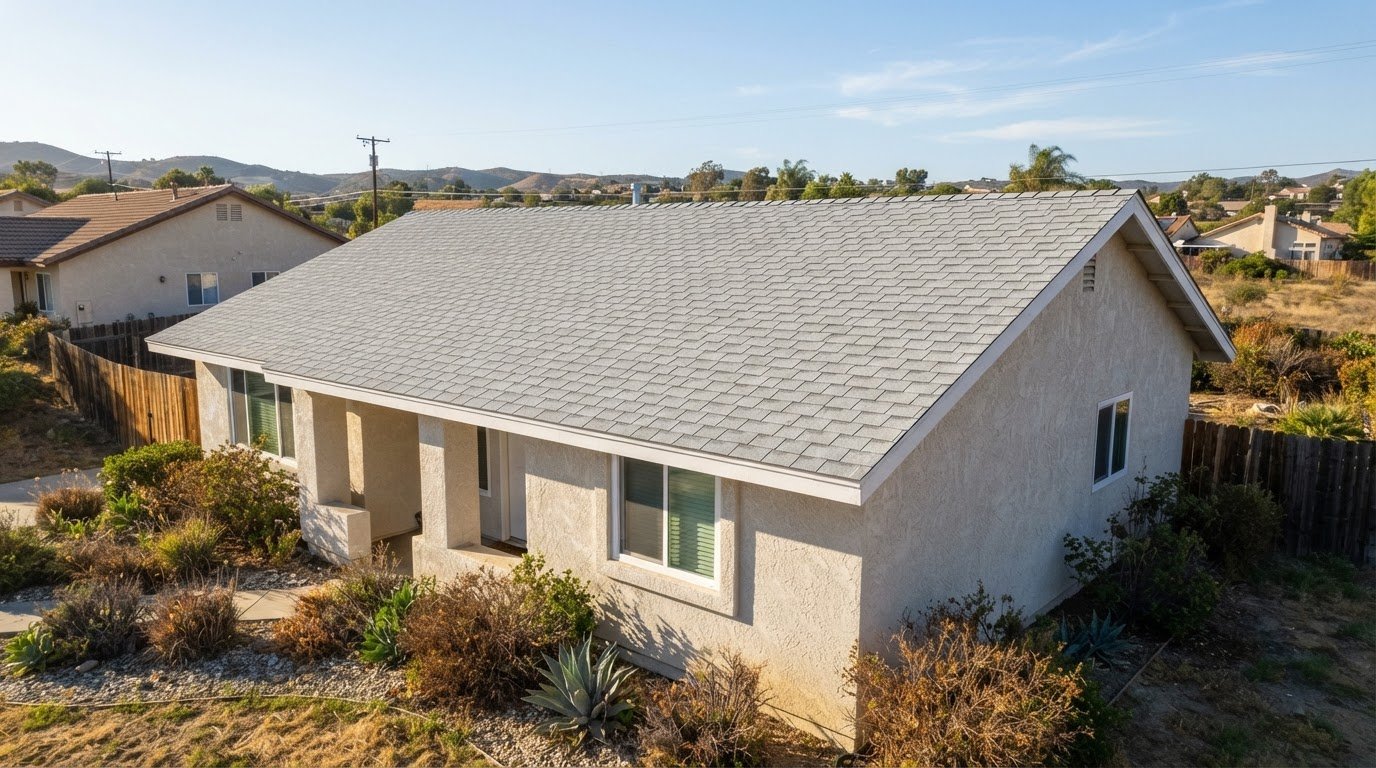
From several safe spots on the ground, check whether the ridge appears to dip, the eaves look uneven, or one roof section seems misaligned with the rest. Compare similar edges instead of relying on a single angle, since perspective can make a straight line look irregular. Take photos from consistent viewpoints when possible. They can help document changes over time and give a roofing professional a clearer description of what you noticed.
Stay off ladders and don’t walk on a visibly compromised roof to get a closer look. A roof surface can be unstable even when it appears intact, and photos can’t establish whether the structure is sound. If you’re searching for how to fix sagging roofline San Diego homes may develop, begin with safe observations from the ground, not a DIY roof inspection.
When should a homeowner treat roof sag as urgent?
A change that appears suddenly or seems to be worsening calls for prompt attention. Keep people away from the area below the affected roof section, and share the timing of the change with a roofing professional. If you also notice water entering the home, fresh ceiling stains, new cracks, or a ceiling that appears to be sagging, report those details promptly. They’re useful clues, but they don’t establish the cause or determine whether the property is safe.
Note the location: Describe whether the dip appears along the ridge, an eave, or another section.
Record changes: Save dated photos taken from the ground and note when you first noticed the concern.
Describe related signs: Include interior staining, cracking, ceiling changes, or water entry without treating them as a diagnosis.
These observations can make a professional assessment more focused. A roofing contractor can examine the visible concern and relevant roof system to determine what the findings may indicate and what work, if any, is appropriate. Appearance alone can’t confirm a structural problem or rule one out.
What Can Cause a Roofline to Sag in San Diego?
A sagging roofline can have several possible explanations. Weakened or damaged framing, prolonged moisture exposure, and deterioration in the roofing system may all warrant investigation, but none can be confirmed from a single symptom. The roof’s age, maintenance history, and records of earlier repairs help put the visible change in context.
San Diego homes vary in roof design and material. For example, professionals may consider whether heavy tile is installed on framing that was not designed to support it over time, particularly in an older home. That doesn’t mean tile is necessarily the cause. The roof structure, its condition, and the scope of any past work all matter. Roofs in San Diego, La Jolla, San Marcos, Encinitas, and Carlsbad can differ in design and exposure, so the property’s actual conditions should guide the assessment.
How can water intrusion or roof damage affect the roofline?
Recurring moisture can affect roofing components and is a reason to look more closely at the roof system. In cases where hidden leaks have compromised framing or interior building materials, comprehensive recovery services from TBC Restoration can help stabilize and restore the property. A leak, damaged flashing, or displaced roofing material may be an inspection clue, but it doesn’t automatically explain a sag. Conditions vary by property, since roof configuration and local exposure influence where water may enter or collect.
Could the roof structure or an earlier repair be involved?
Framing or support concerns are possible contributors, but an assessment is needed to determine whether they’re relevant. Previous roof work, visible patches, and changes in roofing material can help establish useful history. Share what you know about repairs or leaks, but don’t assume a roofline change proves foundation movement or structural failure.
An inspection helps identify the cause before a repair scope is selected. A roofing professional can consider the roof covering, visible damage, and relevant structural elements together, rather than treating one symptom as a diagnosis. That distinction helps keep the next step proportionate to the findings, whether the concern is limited to one area or involves a broader part of the roof.
Before an assessment, gather what you can safely observe from the ground and note the roof’s age, known leaks, maintenance, and prior repairs. Mention any material changes, such as a past reroof, if you know about them. This background can help focus attention on what has changed and where further evaluation may be needed.
For homeowners looking to fix sagging roofline San Diego properties, a project-specific assessment is a sensible starting point. Higher Levels Roofing provides roof repair services informed by the roofing system and observed conditions. Learn more about local roof repair services and how they can address the conditions identified on your roof.
Sagging Roofline Repair or Roof Replacement: How the Findings Guide the Choice
A visible dip doesn’t automatically mean the whole roof needs replacement, and a small-looking change doesn’t guarantee a limited repair. The recommendation depends on what an assessment finds: how much of the roof is affected, what’s causing the concern, the condition of surrounding areas, the roofing material, and the roof’s overall state. The aim is to match the work to the findings, not choose repair or replacement based on appearance alone.
When might a localized roof repair be appropriate?
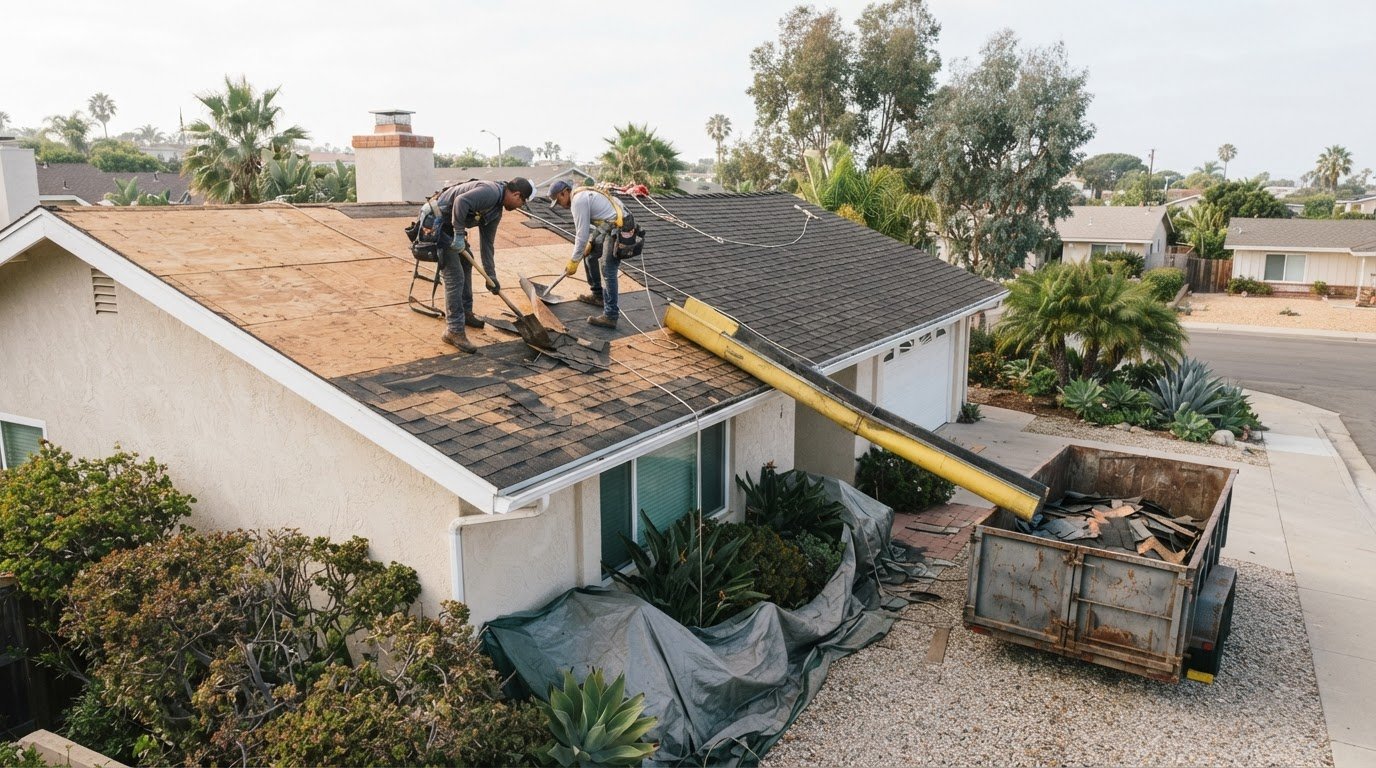
A localized repair may make sense when an assessment finds a specific roofing issue that can be addressed without extending the work across the roof. The repair details depend on the material and the condition of the surrounding area. For example, work on a section of asphalt shingles may differ from work involving concrete or clay tile. A limited visible dip, however, doesn’t establish that the underlying repair will also be limited.
What findings may lead to broader roofing work?
If deterioration affects multiple areas or the roof system has wider concerns, the project scope may need to expand. Roof age alone doesn’t set a fixed cutoff between repair and replacement. The decision rests on an assessment of the existing roof and the problem found. Material also matters. This roofing materials guide explains differences between common systems as you consider the assessment.
Roofing work and structural work aren’t always the same scope. If the findings suggest framing or other structural concerns, those may require separate professional evaluation. A roofing repair recommendation by itself shouldn’t be treated as a structural diagnosis. Clarifying what the roofing assessment covers helps distinguish decisions about the roof covering from issues that may need another kind of evaluation.
The San Diego roof replacement guide offers context on replacement considerations. To fix sagging roofline San Diego properties may need, start with the assessment findings and the condition of the relevant roof area. Higher Levels Roofing provides residential and commercial roof repairs, installations, and replacements, with the work informed by the roofing system and observed conditions.
Before a San Diego Roofer Inspects Your Sagging Roof
A few careful notes can help make an inspection more focused. You don’t need to identify the cause or get onto the roof. Gather what you can safely observe, preserve relevant history, and let a roofing professional assess the concern. If the roofline appears to be changing suddenly, keep people away from the affected area while you arrange an assessment.
Observe from a safe location. Look from the ground or another stable place, such as a window. Note which section appears uneven and whether the change is near the ridge, eaves, or another roof area. Don’t climb a ladder, walk on the roof, or move roofing materials to get a closer look.
Take photographs. Capture the affected section from more than one safe viewpoint. Save earlier photos of the property, if you have them. Images taken from similar angles can help show what you’ve observed over time, but they can’t confirm the roof’s condition.
Note what has changed. Write down the location, when you first noticed the concern, and whether its appearance seems to have changed since then. Include recent observations such as water entry, a leak, or a change inside the home.
Gather roof history. Collect available roof documents, past repair notes, and records of known leaks or material changes. If you don’t know the roof’s age or repair history, simply note that. Avoid guessing.
Arrange a professional assessment. Share your observations and records so the roofer has useful context. Don’t move materials, patch a suspected structural issue, or make repairs yourself before the roof has been assessed.
What information helps make the assessment more useful?
Be specific without making a diagnosis. “The dip is above the front room, and I noticed it after the last heavy rain” is more helpful than “the roof looks bad.” Point out the location, approximate timing, and any related interior observations. Existing photographs, repair notes, and roof documents can add context, even if the history is incomplete.
How can San Diego conditions shape the inspection?
Coastal exposure, local weather, and roof configuration are useful background, not automatic explanations for a roofline change. Note whether the property is near the coast or inland, and mention any weather-related changes you observed. A roofer can consider that context alongside the roof’s material and condition. Permit requirements can vary by project and jurisdiction, so verify current San Diego requirements before work begins rather than relying on assumptions.
These steps help you prepare without taking on a risky inspection yourself. If you’re ready to fix sagging roofline San Diego properties may develop, share your notes with Higher Levels Roofing when arranging an assessment.
How Higher Levels Roofing Can Help Address a Sagging Roofline
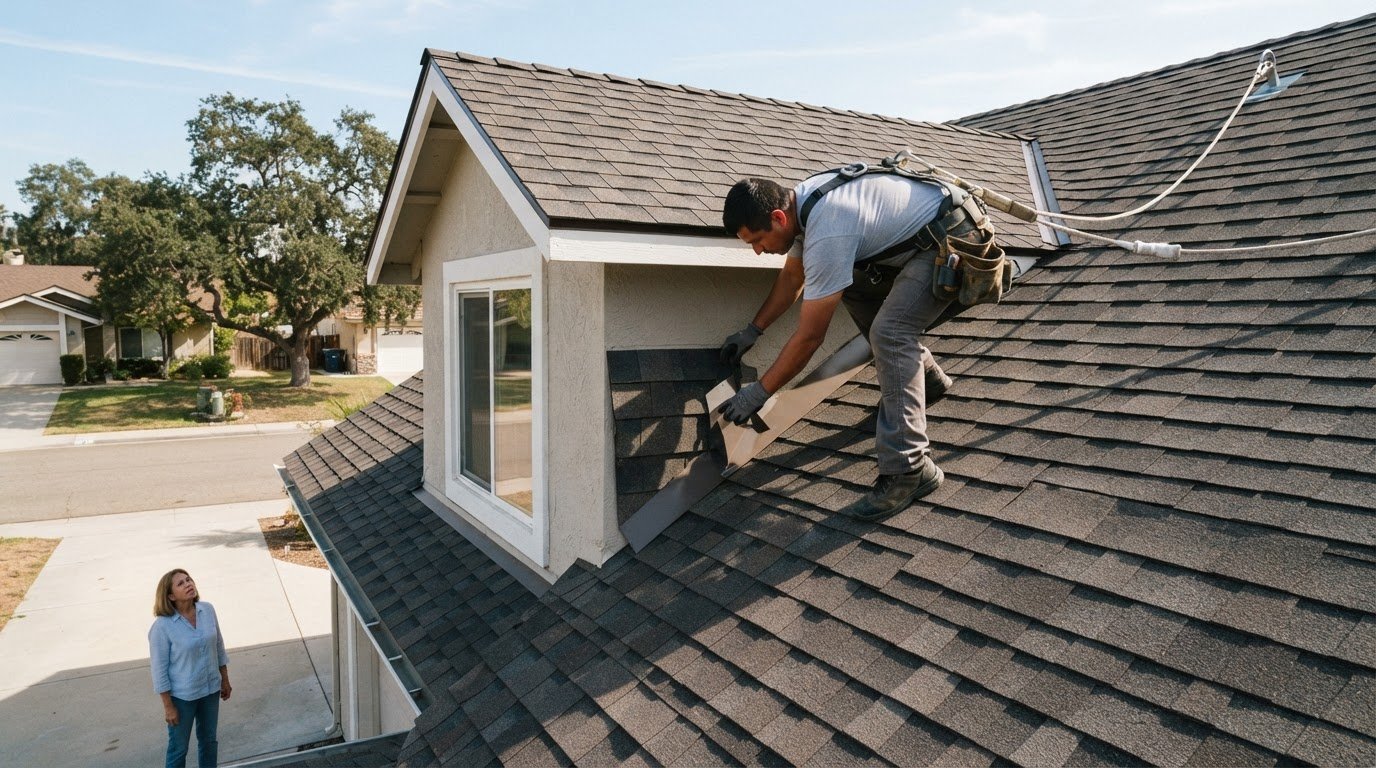
A roofline concern needs a clear assessment before suitable roofing work can be defined. Higher Levels Roofing serves San Diego property owners with residential and commercial roof repairs, installations, and replacements. The process begins with the visible concern and relevant roof system, then uses the observed conditions to shape a project-specific scope.
What should a roofing assessment clarify?
An assessment should describe the observed condition, identify which roof areas are involved, and clarify what roofing work may be appropriate. Material matters because planning for asphalt shingles differs from planning for concrete or clay tile, rolled asphalt torch-down, or TPO. If observations raise a structural concern, conclusions should be grounded in the evidence and the professional expertise appropriate to that issue.
Useful information to share includes where the roofline appears uneven, when you first noticed it, and any roof history or related observations you’ve recorded. Those details provide context, but they don’t replace an assessment of the roof itself. The goal is to distinguish what is visible from what the findings support, then define a scope that addresses the relevant roofing conditions without assuming every sag needs the same solution.
How does the project move from assessment to roofing work?
A practical sequence keeps the decision clear: discuss the concern and available roof history, assess the affected area and roofing system, then define the work based on the findings. The resulting scope may involve roof repair, installation, or replacement, depending on the project. If the concern extends beyond roofing work, that distinction should be made rather than treating a roof assessment as a complete structural diagnosis.
For example, a roof with asphalt shingles and a concern limited to one area calls for a scope informed by that material and the surrounding roof condition. A roof with tile, torch-down, or TPO may involve different roofing considerations. The material alone doesn’t determine the answer. The affected areas and overall condition matter too.
As a licensed roofing contractor serving San Diego and nearby communities, Higher Levels Roofing provides residential and commercial roofing work across these systems. To fix sagging roofline San Diego properties may develop, begin with an assessment that connects the visible concern to the relevant roof and its observed condition. That helps clarify the next decision, whether the appropriate roofing scope is repair, installation, or replacement.
If you’ve noticed a change in your roofline, share what you’ve observed and discuss the property with Higher Levels Roofing.
Move Forward with a Clear Roofing Plan
Taking the next step doesn’t mean deciding on repair or replacement before the roof has been assessed. It means turning what you’ve noticed into useful information: where the concern appears, how it has changed, and what you want to understand. For homeowners looking to fix sagging roofline San Diego properties may have, a careful assessment can replace guesswork with a project-specific plan.
As you consider the recommendations, focus on how the proposed roofing work relates to the observed conditions. A clear explanation of the scope helps you understand what the work addresses and what may need separate evaluation. You deserve to feel informed, not rushed, as you decide how to protect your property.
Discuss your roofline concern with Higher Levels Roofing to take a steady first step toward understanding your options. Share what you’ve noticed and arrange an assessment for your San Diego area property.
Frequently Asked Questions
How much does it cost to fix a sagging roofline in San Diego?
There isn’t one reliable price without knowing what’s causing the sag and what work the roof needs. A repair confined to roofing materials differs from work involving several roof areas or underlying framing. To fix sagging roofline San Diego properties may need, the roof conditions must be assessed and the scope defined before project-specific pricing is available. Ask for an explanation of what the proposed work addresses and which findings inform the estimate.
Is a sagging roofline an emergency?
A roofline that appears to change suddenly or keeps worsening deserves prompt attention. Keep people away from the area beneath it, especially if you also notice falling material, new cracking, or water entering the home. Don’t rely on a photo or quick look to decide whether the structure is safe. If the building’s condition seems immediately dangerous, move away from the affected area and contact local emergency services.
Can a roofline sag without a roof leak?
Yes, a roofline may appear uneven even when you haven’t noticed a leak. Possible explanations can involve framing, support, roofing material, or other conditions that don’t produce visible water inside the home. Conversely, a leak may be present without an obvious exterior dip. Keep track of what you’ve observed, including whether the concern changes after rain, but don’t treat the absence of water stains as proof that the roof is sound.
Does homeowners insurance cover a sagging roofline?
Coverage depends on your specific policy and the circumstances behind the damage. A sudden event may be treated differently from deterioration that developed gradually, but only your insurer can determine how policy terms apply. Review your policy and contact the insurer about next steps. Keep photos and records of when you noticed the change, and avoid disturbing damaged areas unless needed to prevent immediate harm.
Do I need a permit to repair a sagging roof in San Diego?
Possibly. Permit requirements depend on the work and the jurisdiction. Structural changes generally require a permit in the City of San Diego, while a project limited to replacing roof covering may be treated differently if the structure isn’t altered. Because a sagging-roof project can involve more than surface materials, confirm current requirements with the relevant local building department before work begins, especially if the scope changes after an assessment.
Can a sagging roofline be repaired without replacing the entire roof?
Yes, a full replacement isn’t automatic. If an assessment finds a limited roofing problem and the surrounding roof is in suitable condition, a repair may be an option. Wider deterioration or conditions affecting the overall roof may call for a broader scope. The recommendation should reflect the affected areas and the roof’s condition, rather than a rule based only on how large the dip looks from the street.
Should I go into the attic to investigate a sagging roofline?
Don’t enter an attic if you’d need to climb, cross an unstable surface, or approach an area that looks damaged. Even from the hatch, avoid stepping onto ceiling drywall or touching framing that appears cracked or displaced. If you can observe safely from an existing access point, note visible changes without moving insulation or stored items. Otherwise, leave the inspection to a professional and share your exterior observations.
Comments