


Local Family-Owned Roofing for San Diego Homes and Businesses

A dependable roof starts with work suited to the building, whether it needs installation, repair, or replacement. Local family-owned roofing companies in San Diego help homeowners and businesses address these needs with a locally focused approach.
It’s reasonable to want clear information before deciding what your roof needs and who should handle the work. This article explains how residential and commercial roofing projects can differ, what to consider when choosing materials and planning a project, and when a repair or replacement may be the right next step. You’ll also learn how Higher Levels Roofing’s roofing services fit into those needs, from shingle and tile options to repairs, so you can approach your project with greater clarity.
Table of Contents
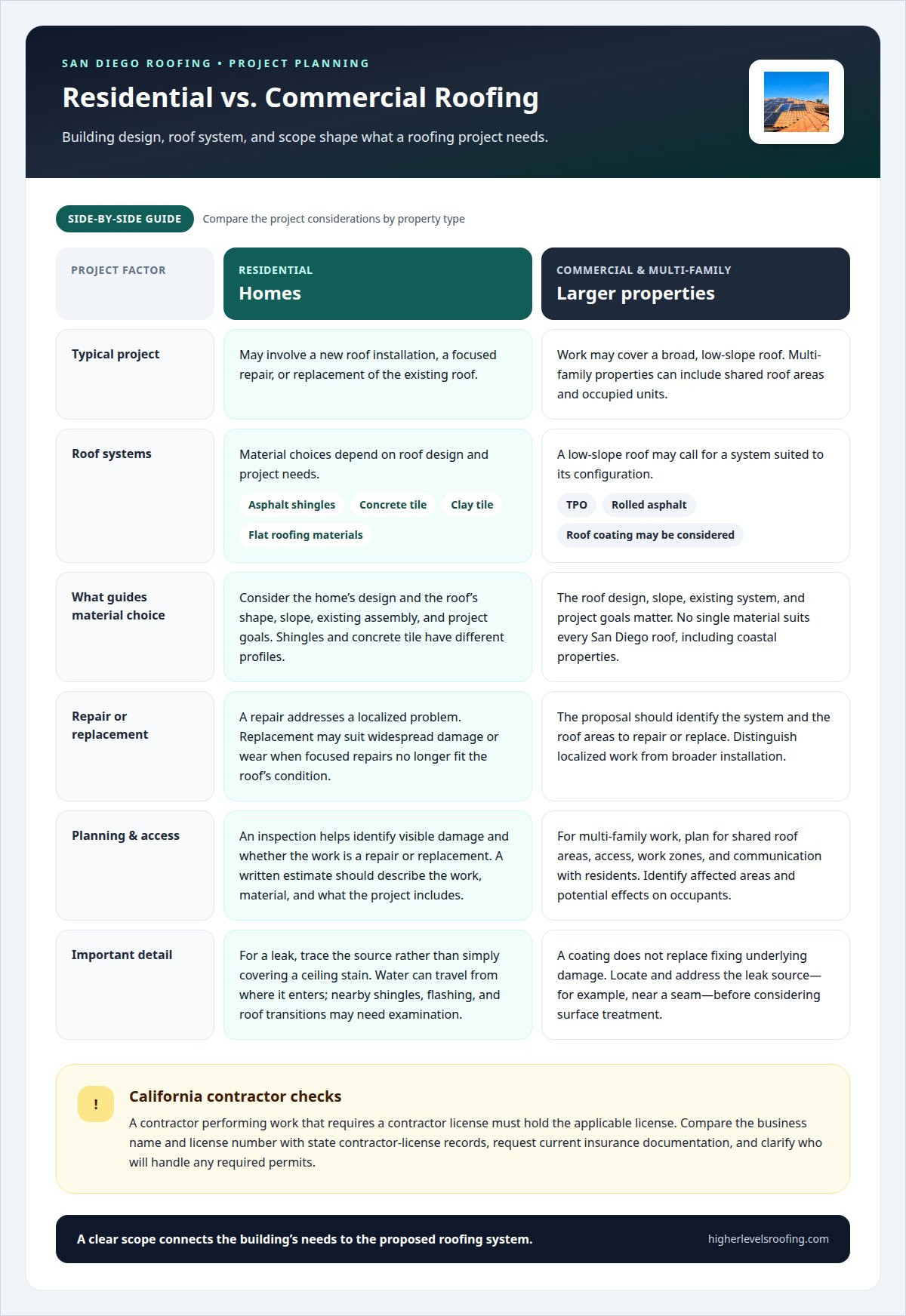
Residential roof installation, repairs, and replacements
Family-owned San Diego roofing companies offer residential roof installation, repairs, and replacements. Depending on the roof, work may include asphalt shingles, concrete tile, clay tile, or flat roofing materials. Roof repair addresses a localized problem; replacement renews the roof when repairs no longer suit its condition.
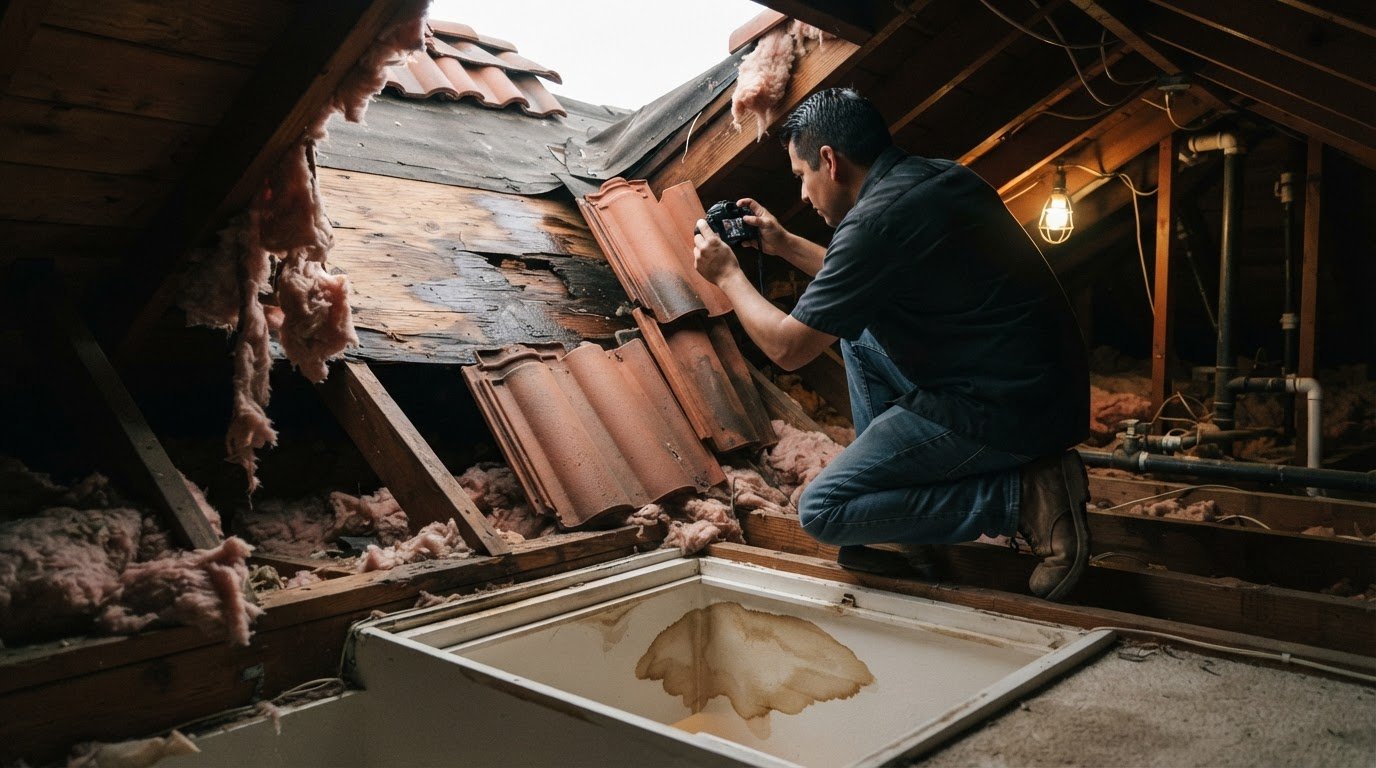
A leak calls for finding its source, not simply covering a ceiling stain. Water can travel from where it enters, so a roofer examines nearby shingles, flashing, and roof transitions. A missing shingle may expose the area beneath it, while damaged flashing can let water in around a roof opening. The repair should address the cause and restore the affected roofing.
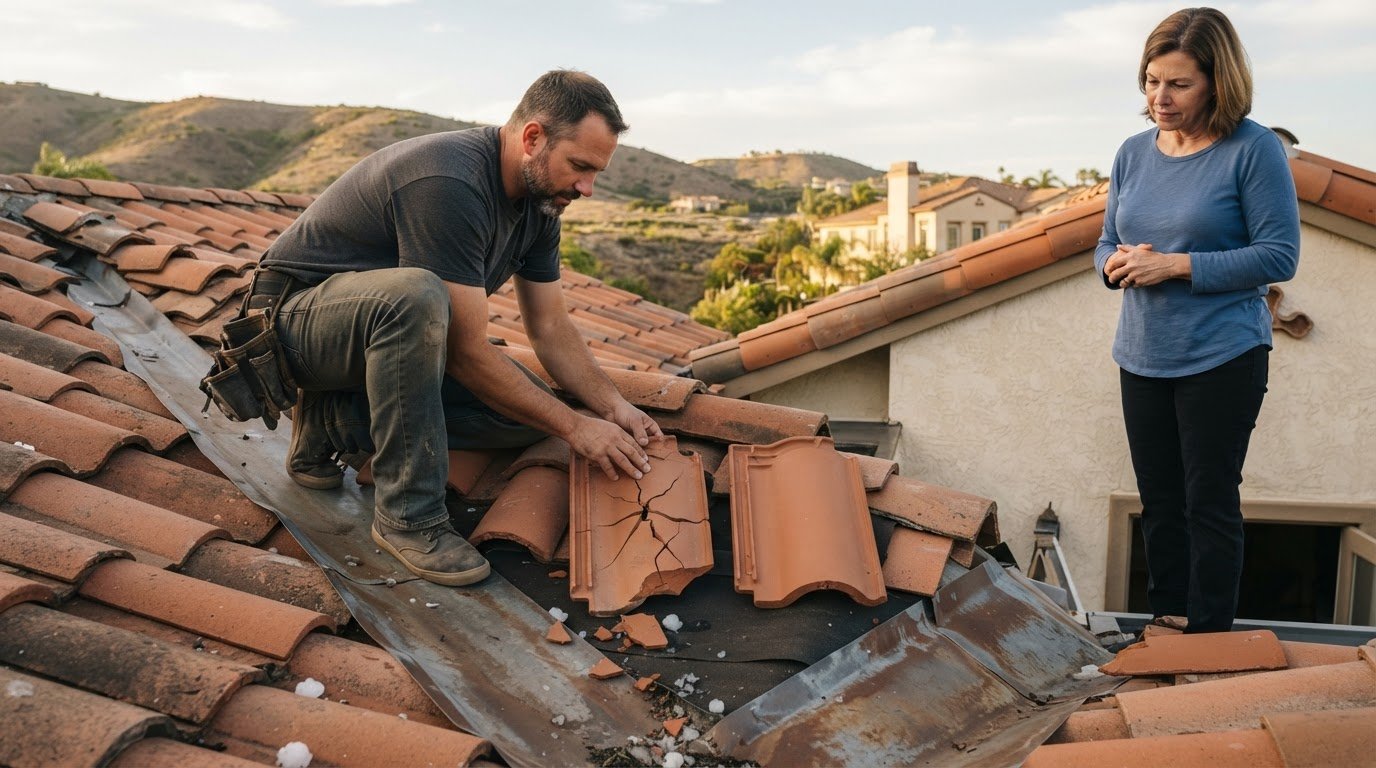
An inspection can identify visible wear before it develops into a larger repair. Look for loose, cracked, or missing roofing, accumulated debris, and signs of water entry inside the home. After a storm or a new ceiling stain, prompt attention can help determine whether the issue is isolated or part of broader deterioration. An inspection identifies concerns; repair work addresses them.
Replacement may make sense when damage or wear is too widespread for a focused repair. The decision depends on the roof’s condition, the extent of affected areas, and whether the existing material can be repaired effectively. Planning also involves material and appearance. Shingles and concrete tile have different profiles, so choose a material that suits the home’s design and project needs.
Gutters are part of the drainage system, separate from the roof covering. Financing and warranty terms depend on the project and written agreement, so don’t assume they are included based on the roofing material. A clear scope distinguishes roof work from related exterior work and states whether the proposal covers a repair, installation, or full replacement.
San Diego residential and commercial roofing
San Diego roofing projects vary by building, roof shape, and existing system. A home may need shingle installation or a focused repair, while a commercial building may need work across a broad, low-slope roof. Multi-family properties involve shared roof areas and occupied units, so planning should account for access, work zones, and communication with residents.
Yes. In California, a contractor performing work that requires a contractor license must hold the applicable license. To verify a roofer, compare its business name and license number with state contractor-license records, request current insurance documentation, and clarify who will handle any permits required for the project.
No single material suits every San Diego roof, including coastal properties. Selection depends on roof design, slope, existing assembly, and project goals. Asphalt shingles, concrete tile, and clay tile suit different roof designs; flat roofs may call for TPO or rolled asphalt. A roofer can assess the building and explain which options fit its configuration.
Commercial roofing decisions involve more than the surface material. For a low-slope roof, the proposal should describe the system and the areas to be repaired or replaced. A roof coating may be part of some projects, but it does not replace fixing underlying damage. For example, a leak near a seam calls for locating and addressing the source before considering surface treatment.
For commercial and multi-family repairs, clear communication matters alongside the work scope. A useful project plan identifies affected roof areas, access arrangements, and potential effects on occupants. The roofer should explain the repair approach plainly and distinguish localized work from broader installation. For San Diego properties, a careful assessment connects the building’s needs with a suitable roofing system.
Residential roof installation and replacement
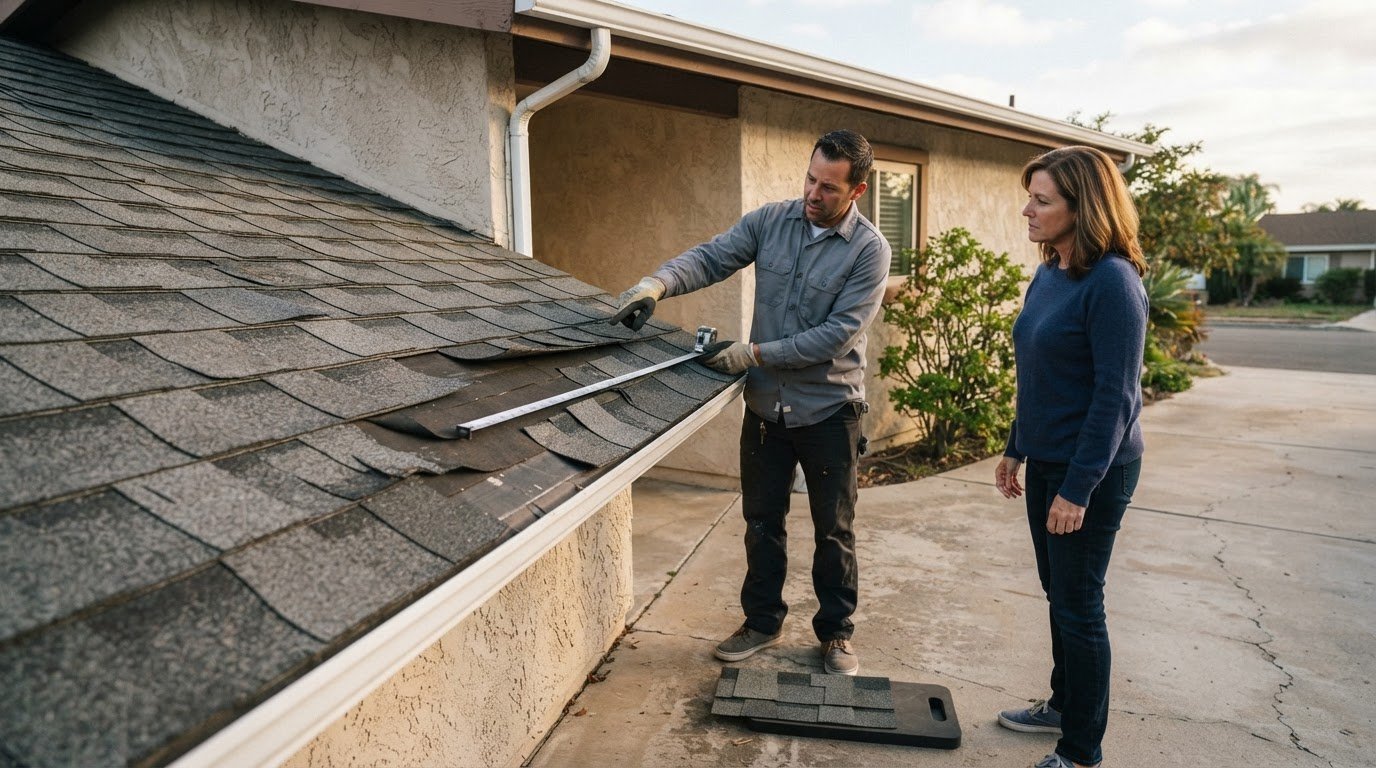
A residential replacement begins with an inspection of the existing roof, followed by a written estimate and material selection. The inspection helps identify visible damage and whether repairs can address it or replacement is more suitable. The estimate should describe the work, material, and what the finished project includes. When comparing local family-owned roofing companies in San Diego, clear documentation makes each proposal easier to understand.
Reviews and ratings can offer useful context, but compare details rather than relying on a score alone. Look for comments about communication, cleanup, scheduling, and how the finished work addressed the homeowner’s needs. One reviewer described an Owens Corning shingle installation using 50-year shingles; another said a roof replacement was completed within one week. These are individual customer experiences, not a standard schedule or outcome.
Compare bids by checking the same basics in each estimate: roof areas included, material, preparation, repairs, and cleanup. Confirm that each proposal describes the same work and identifies exclusions. A lower total may reflect a different scope, so compare written details before judging the bids. Ask for an inspection report that connects observed conditions with the proposed repair or replacement.
How long does roof replacement take in San Diego? One reviewer reported completion within one week, but project duration depends on roof size, material, existing conditions, and the work involved. The same review described scheduling shortly after the holidays in early January 2024. That specific experience can help illustrate a timeline, but it doesn’t establish a general schedule.
An inspection report and estimate have different purposes: the report records observed roof conditions, while the estimate outlines proposed work. For example, a report might identify damaged shingles in one area, while the estimate explains whether the plan is a targeted repair or broader replacement. Use these documents to understand the reasoning, compare scopes, and discuss how installation will proceed. This keeps the decision grounded in the roof’s condition.
Family-owned roofing company
Local ownership and family operation are separate details, neither of which proves workmanship. To identify a family-operated roofer in San Diego, look for a clear statement about who owns and runs the business. A local address alone doesn’t establish family ownership, and a family name alone doesn’t establish local operations. Assess ownership claims separately from the written scope and quality of the work.
A roofer’s approach shows in the details. An inspection should connect observed conditions to the proposed scope, rather than recommend full replacement without explaining why. A localized problem on a shingle roof may call for a different discussion than widespread damage. A clear estimate describes the work and materials, helping homeowners see how the plan responds to the roof’s condition.
Warning signs include a vague estimate, pressure to decide immediately, or recommendations that don’t explain the inspection findings. Be cautious if proposed work changes without a clear reason or the roofer can’t explain what the scope includes. A proposal that says only “roof work,” for example, doesn’t tell you whether it covers a repair, replacement, or particular material. Clear details make accountability easier.
Reviews can add context, but they don’t replace project documentation. Look for specific comments about communication, workmanship, and how questions were handled. Trust grows through clear explanations and follow-through, not simply a “family-owned” label. The roof’s design, material, and condition also shape which services are appropriate, so a sound recommendation accounts for those details.
Before work begins, a practical process is straightforward: review the inspection findings, understand the written scope, and keep project decisions documented. That gives homeowners a useful record if questions arise during installation or repair. For a roof concern that needs professional attention, discuss roof repair services as a next step.
Higher Levels Roofing: Roof Repair Services
Higher Levels Roofing provides roof repair services for homes and businesses in San Diego. Turn to the team when a leak, damaged area, or visible wear needs attention. An assessment can clarify whether a focused repair is suitable or whether the roof’s broader condition calls for a different scope.
Residential roofing options include asphalt shingles, flat concrete tile, and concrete S tile. The right choice depends on the roof and the work required. Sharing details about the affected area and your concern can help start a practical discussion about next steps.
If your roof needs attention, contact Higher Levels Roofing to discuss a repair.
Choose a Clear Next Step for Your Roof
A roofing project is easier to plan when the next step is specific: identify the concern, clarify the work needed, and choose a material suited to the home. If you’re considering a local family-owned roofing company in San Diego, a conversation with Higher Levels Roofing can help turn those priorities into a practical plan.
Higher Levels Roofing offers asphalt shingle, flat concrete tile, and concrete S tile roofing. These options give homeowners different materials to consider. Start with your property’s needs and the work you’re planning, whether a new installation or attention to an existing roof.
Bring your questions about the roof, the proposed scope, and material options to the conversation. A clear starting point can help you decide what to do next without rushing the decision. Contact Higher Levels Roofing to discuss your roofing needs and take the next step with confidence.
Frequently Asked Questions
Ready for a roof you can count on?
A roof you can count on starts with a system suited to the property and a clearly defined scope. Before deciding, note the concern you want addressed, such as a recurring stain or a loose-looking shingle, and gather relevant photos. This gives the roofing conversation a clear starting point and helps you track whether the proposed work addresses the concern.
What family-owned roofing companies serve San Diego County?
Higher Levels Roofing is a locally owned and operated roofing contractor serving San Diego, including La Jolla, San Marcos, Encinitas, and Carlsbad. Customer testimonials identify Carlos as a key principal. These local ties can help San Diego County property owners understand the company’s connection to the region when considering roofing work for a home or commercial property.
Do San Diego roofing companies offer free inspections, estimates, or warranties?
Higher Levels Roofing offers a free estimate. An estimate, an inspection, and warranty coverage are different things: an estimate outlines proposed work, an inspection assesses roof conditions, and warranty terms describe coverage and limits. Review the written proposal to understand what the estimate covers and what any warranty language applies to. Clear expectations help before work begins.
How do San Diego family-owned roofers compare by reviews and ratings?
When reading reviews, look for specific details about communication, cleanup, scheduling, and how the finished work met the homeowner’s needs, rather than relying on ratings alone. Reviews provide context but don’t replace project documentation.
Comments