


What to Do If Insurance Denies Your Roof Claim in San Diego

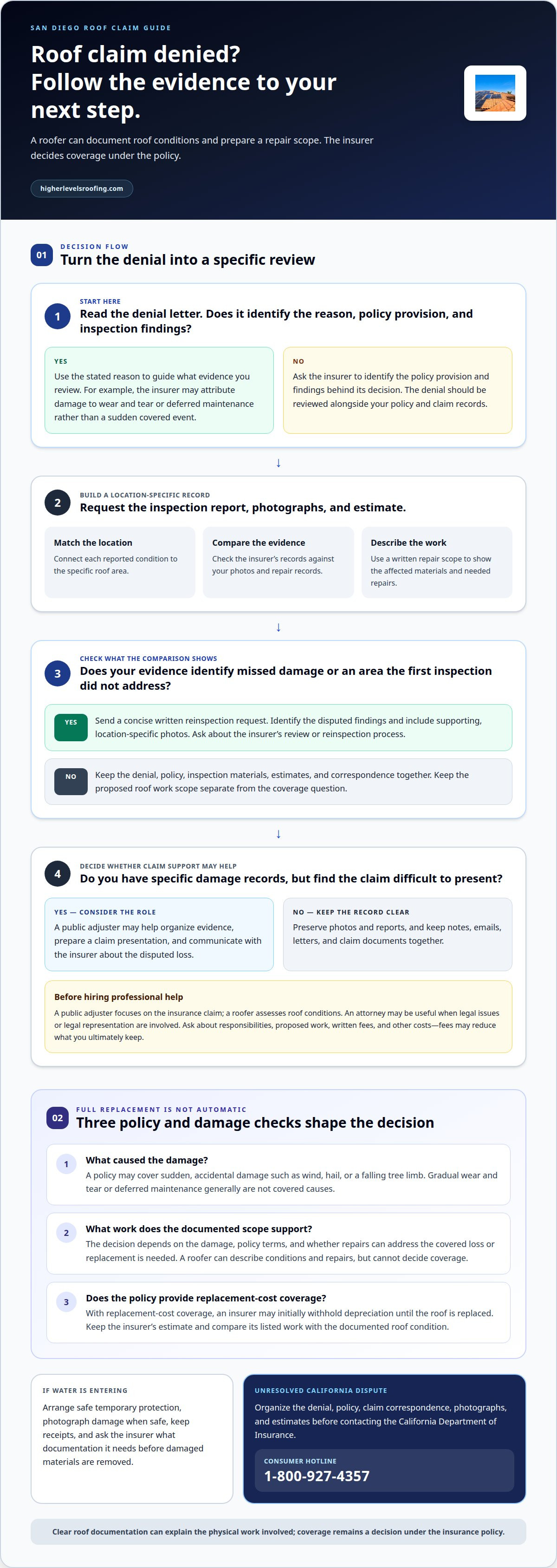
A roof claim denial isn’t always the end of the process. If you’re deciding what to do if insurance denies a roof claim in San Diego, a roofer can document roof conditions and prepare a repair scope, but the insurer decides coverage. Review the denial, gather evidence of damage the inspection may have missed, and ask the insurer about its review or reinspection process.
A denial can feel final, especially when the roof still needs attention. Start by understanding the reason given, then respond with clear, relevant documentation rather than relying on a general recommendation to replace the roof.
This article explains how to read the denial, what evidence may support an appeal, and when a public adjuster may be useful. It also covers factors that can affect whether insurance pays for a full roof replacement, helping you choose a practical next step.
Table of Contents
1. Should I hire a public adjuster after a denial?
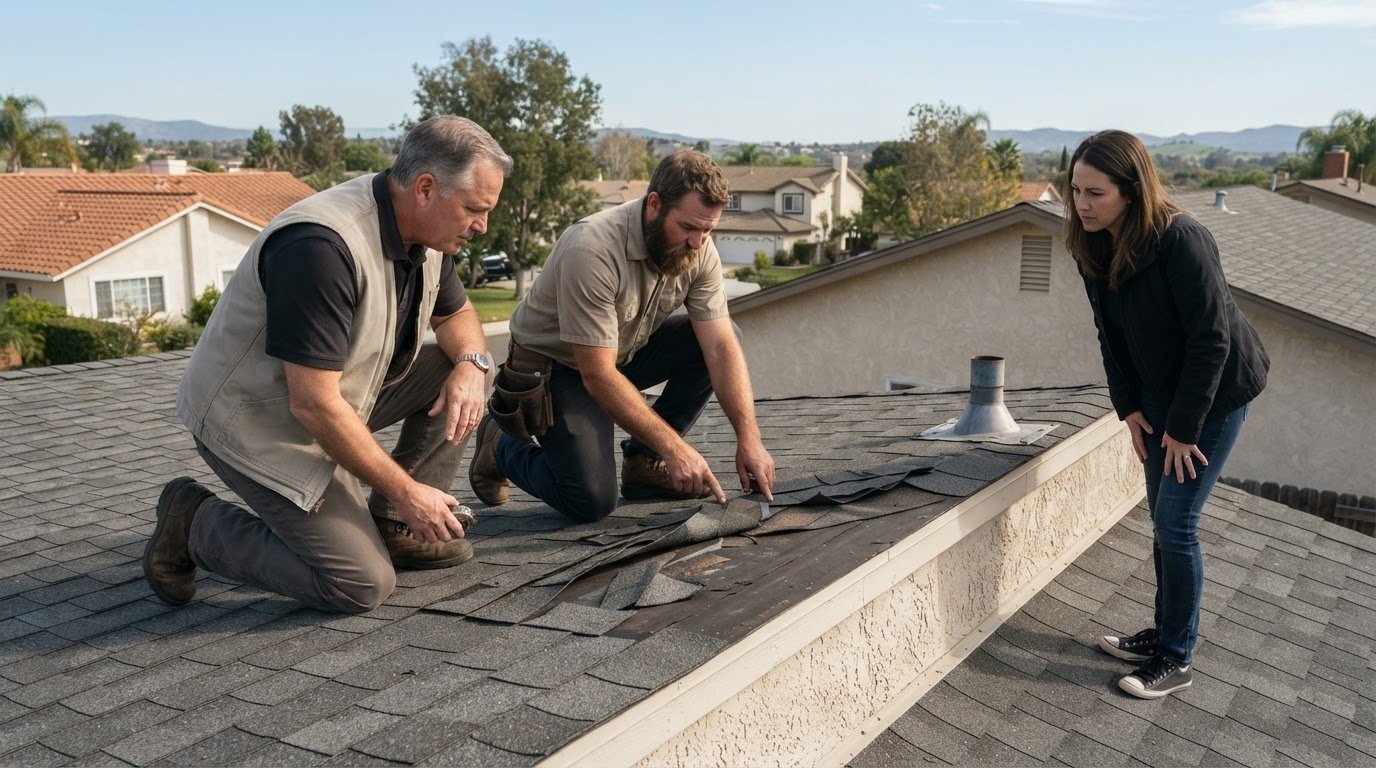
A roofer can support a roof claim, but does not decide coverage. In California, homeowners may have their roofing contractor present during the insurer’s roof inspection. The contractor can point out physical conditions and explain the repair scope; the insurer evaluates coverage under the policy. That distinction matters when deciding whether to appeal or seek help with the claim.
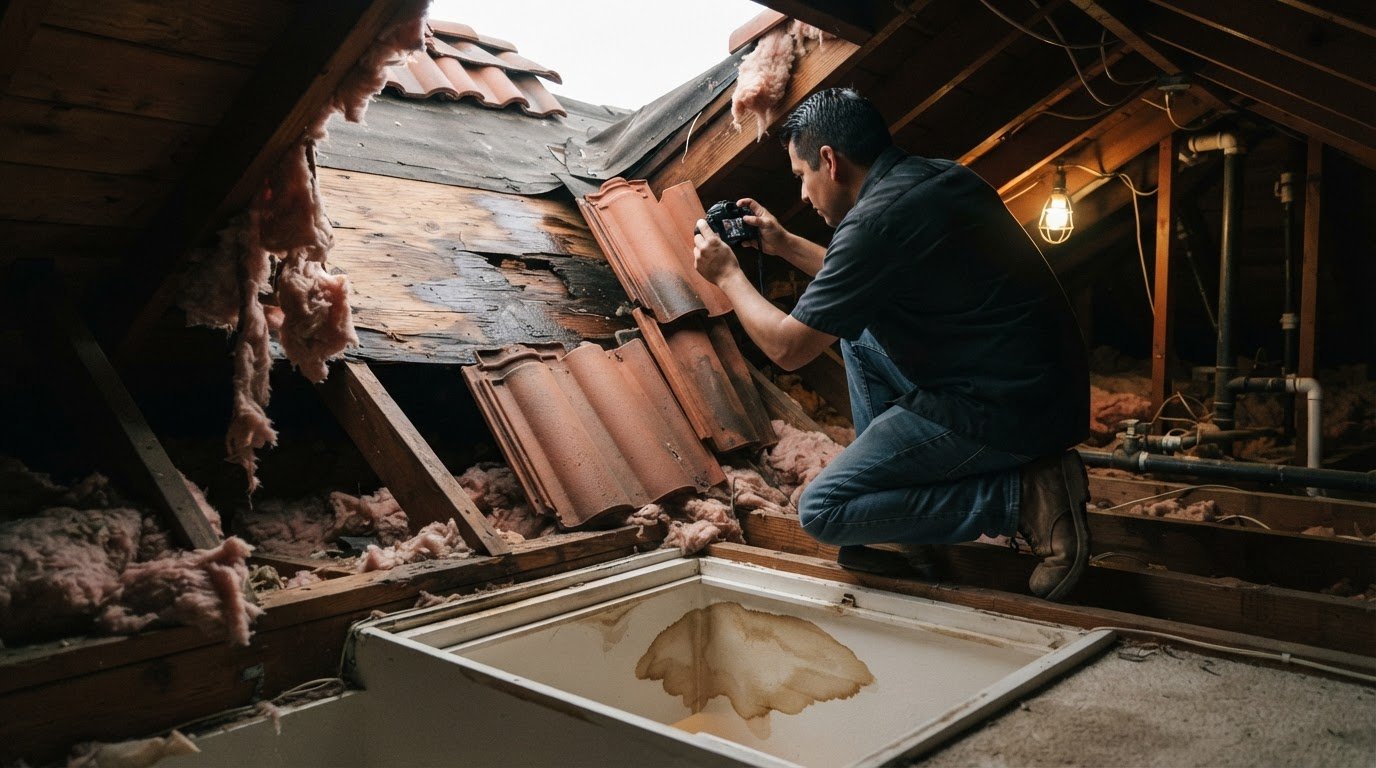
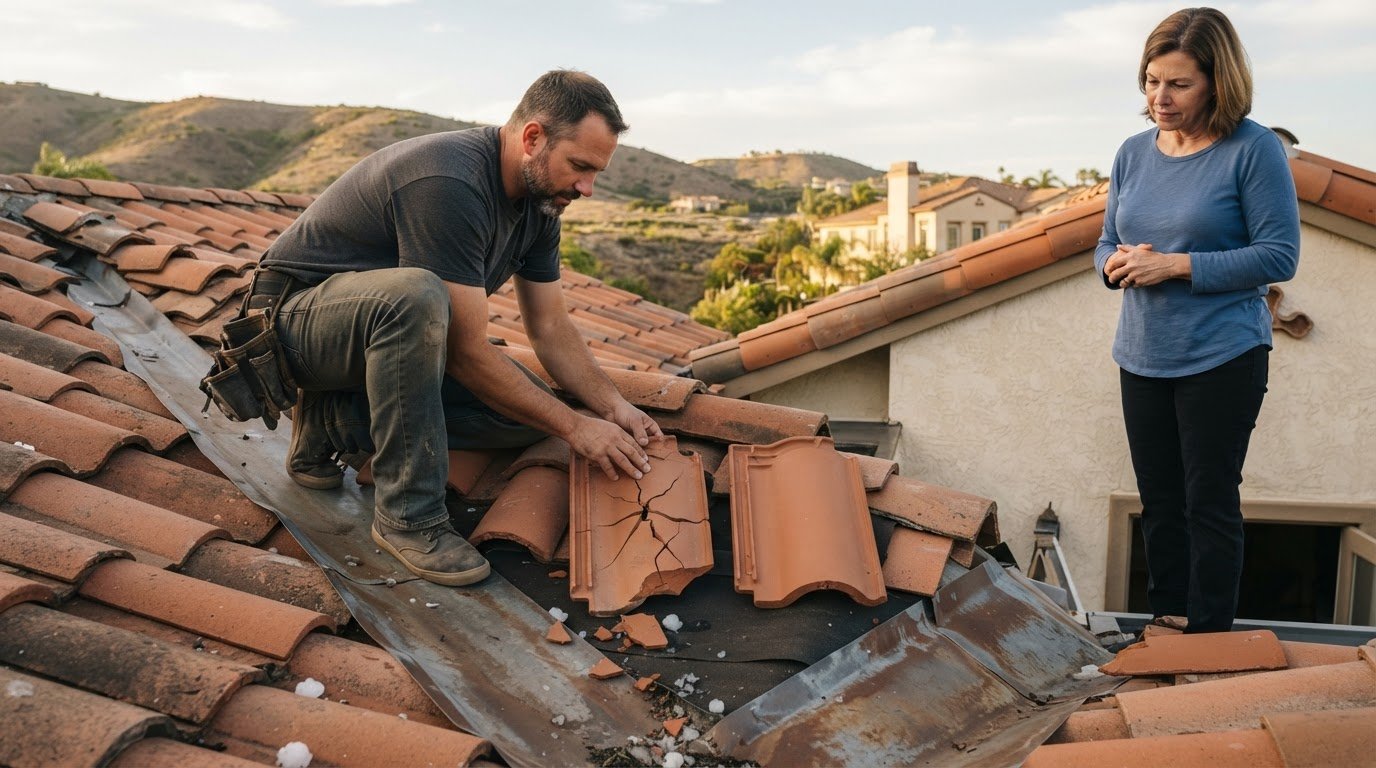
During an inspection, a contractor can document damaged materials, affected roof areas, and necessary repairs. Useful records connect each condition to a specific location, photograph, and written scope. For example, a photo of a damaged tile is more informative when it identifies the roof location and repair needed. This evidence may highlight differences between the insurer’s estimate and the roof’s condition, but it does not determine what the policy covers.
A public adjuster may help organize claim evidence, prepare a claim presentation, and communicate with the insurer about the disputed loss. Consider one when you have specific records supporting damage but find the claim difficult to present. The roles differ: a roofer assesses roof conditions, while a public adjuster focuses on the insurance claim.
Hiring a public adjuster or insurance attorney may involve fees that reduce what you ultimately keep. Before agreeing, understand the written fee arrangement and any other costs. Compare the proposed work with the complexity of the dispute so you can assess whether the added support justifies the expense.
An attorney may be useful when the dispute raises legal issues or requires legal representation. A public adjuster and an attorney have different roles, and neither replaces a roof inspection. Ask each professional to explain their responsibilities, proposed work, fees, and approach to the specific denial.
Before the insurer’s inspection, preserve existing photos and reports, and arrange for the contractor to attend if appropriate. Keep the discussion focused on observable damage, locations, and repair needs. A clear record can help you decide whether professional claim assistance would be useful.
2. Does insurance cover a full roof replacement in San Diego?
Insurance may cover full replacement when the policy covers sudden, accidental damage, such as wind, hail, or a falling tree limb. Gradual wear and tear or deferred maintenance generally aren’t covered causes. The decision depends on the damage, policy terms, and whether repairs can address the covered loss or replacement is needed.
With replacement-cost coverage, an insurer may initially withhold depreciation until the roof is replaced. Keep the insurer’s estimate and compare its listed work with the documented roof condition. If a roofer identifies missed damage, location-specific photos and a written repair scope can explain why the estimate may not address the covered loss.
For a claim or dispute, keep a log of dates, names, call summaries, emails, letters, and claim documents. The California Department of Insurance advises homeowners to keep copies of all communications with their insurer. If water is entering, arrange safe temporary protection, photograph the damage when safe, and keep receipts. Ask the insurer what documentation it needs before damaged materials are removed.
To raise an unresolved California dispute, organize the denial, policy, claim correspondence, photographs, and estimates before contacting the California Department of Insurance. California homeowners can call its Consumer Hotline at 1-800-927-4357 for help with an insurance dispute. For a Texas claim, the Texas Department of Insurance provides a complaint process for unresolved disputes; that process is for Texas, not San Diego homeowners.
A roof repair can limit further damage while the insurer reviews the claim, but document the condition and temporary work. For a roof inspection and repair scope, roof repair services can help clarify the physical work involved. Keep those findings separate from the insurer’s coverage decision.
3. Understanding the insurer’s denial and policy explanation
Start with the denial letter, not assumptions about coverage. Identify the reason given, the policy provision cited, and the inspection findings behind the decision. The insurer may have concluded that the damage resulted from wear and tear or deferred maintenance rather than a sudden covered event. The reason matters because each explanation calls for different evidence.
The NAIC model claims regulation says a denial should be in writing and refer to the specific policy provision supporting it. A model regulation alone does not establish a California statutory requirement. Ask the insurer to identify the provision and findings behind its decision, then compare those details with your policy and claim records.
Request the insurer’s inspection report, photographs, and estimate. Match each reported condition to its roof location and to any photos or repair records you have. If the report describes one damaged area but omits another, clearly note the location and evidence. This makes the disagreement specific instead of simply claiming the inspection was incomplete.
A reinspection may be appropriate when new evidence identifies missed damage or an area the first inspection did not address. Send a concise written request identifying the disputed findings and supporting photos, then ask about the insurer’s review or reinspection process. Keep copies of your request and the response with your claim correspondence.
After a denial, roofing decisions still depend on the roof’s physical condition. A repair may address localized damage, while broader work may be considered when the documented scope supports it. A roof inspection can describe affected materials and needed repairs, but it cannot decide whether the insurer owes coverage. Keep the proposed work scope separate from the policy question.
For homeowners in San Diego, La Jolla, San Marcos, Encinitas, and Carlsbad, a careful review pairs the denial’s exact reason with the roof inspection evidence and policy language. If the explanation cites wear, compare it with evidence of sudden damage. If it cites a policy exclusion, ask how that provision applies to the observed conditions. This can clarify whether to submit more evidence or request another review.
4. Appealing a denied roof claim
A useful appeal answers the denial point by point. Start with the insurer’s letter and identify each disputed finding, such as “no storm damage” or “wear and tear.” Connect each disagreement to evidence and state what review you’re requesting. Knowing what to do if insurance denies a roof claim in San Diego starts with a focused response that gives the insurer a clear basis to reconsider its decision.
The facts discussed here do not establish a single deadline for California claim appeals. Review your policy and denial correspondence for applicable time limits or next steps, and submit your response promptly. Keep a copy of the appeal, attachments, and delivery record. If the insurer has a reinspection process, ask how to request it and what information it needs.
Build the appeal around evidence tied to the disputed roof areas. Include location-specific photos, a roofer’s written findings, the insurer’s estimate, and relevant repair records. If the estimate omits a damaged section, identify its location, attach clear photos, and explain the repair work described in the contractor’s report. Weather records may help establish when damage was observed, but connect them to physical evidence on the roof.
Keep the tone factual. A request for full replacement is stronger when documented damage and the repair scope explain why localized work may not address the covered loss.
If the dispute concerns the amount of a covered loss, appraisal may help resolve that disagreement. California homeowners may also be referred to the Residential Property Claims Mediation Program, which helps resolve insurer disputes without going to court and is free. These options address different needs, so distinguish a coverage disagreement from a dispute about repair costs.
For homeowners deciding what to do if insurance denies a roof claim in San Diego, a clear roofing scope can make the physical damage easier to assess. Request a roof inspection to document affected areas and repair needs for your appeal.
Higher Levels Roofing: Roof Repair Services
Higher Levels Roofing provides roof repair services to assess roof damage after an insurance decision. A roofer’s findings can clarify which materials are affected and what work is needed, while the insurer remains responsible for its coverage decision. Clear documentation can also help you understand your roof’s physical condition as you consider next steps.
The right repair for a damaged roof depends on its material and condition. Higher Levels Roofing works with asphalt shingles, flat concrete tile, and concrete S tile. A focused repair may suit localized damage, while broader work may be considered based on the roof’s condition and project needs. The repair scope remains separate from any insurance appeal.
If you need help assessing roof damage or planning repairs, contact Higher Levels Roofing.
Choose a Clear Next Step for Your Roof
Once you’ve decided what to do if an insurer denies your roof claim in San Diego, keep the insurance dispute separate from the roof’s repair needs. A claim review addresses the policy decision; a roofing assessment helps you plan work based on the roof’s condition. Taking practical steps on repairs can help you protect and maintain your home while you handle the claim process.
Higher Levels Roofing offers roof repair, asphalt shingle roofing, flat concrete tile roofing, and concrete S tile roofing. Whether you need a focused repair or are considering broader roofing work, understanding the affected areas can help shape the next conversation.
For a roof assessment or repair discussion, contact Higher Levels Roofing. Take the next step with a careful plan for your roof and your home.
Frequently Asked Questions
Can my roofer appeal a denied roof claim for me?
Your roofer can support an appeal with a roof assessment, photographs, and a repair scope, but coverage decisions belong to the insurer. In California, you may have your roofing contractor present during the insurer’s inspection. The roofer can identify a damaged section and explain the work it needs. You, or a qualified claims professional representing you, can then present that evidence to the insurer.
Does insurance cover a full roof replacement in San Diego?
Insurance may cover full replacement when your policy covers sudden, accidental roof damage and the documented damage supports replacement. Wind, hail, or a falling tree limb can cause sudden damage; gradual wear and deferred maintenance generally aren’t covered causes. Review the policy’s coverage terms and the insurer’s estimate. Replacement-cost coverage may allow depreciation to be paid after the roof is replaced.
How long do I have to file a roof claim in California?
Follow your policy’s claim-notice requirements and report roof damage promptly. The applicable time can depend on the policy and circumstances, so don’t assume a deadline from another state applies in California. Keep the date you discovered the damage, photos taken before cleanup, and records of temporary repairs. These details help explain when you noticed the damage and what you did afterward.
Is there a deadline to dispute a denied claim?
Review your policy and denial letter for any time limits or required steps, then submit questions or supporting evidence promptly. Save a dated copy of your response and the insurer’s replies. If you’re unsure how to proceed, California homeowners can call the California Department of Insurance Consumer Hotline at 1-800-927-4357 for help with an insurance dispute.
Should I hire a public adjuster after a denial?
A public adjuster may help present and manage the insurance claim when you’re disputing the insurer’s findings or the amount of loss. Consider whether the claim’s complexity and the adjuster’s written fee terms make that assistance worthwhile. A roofer contributes information about physical roof conditions; a public adjuster focuses on the claim. Neither role guarantees a particular coverage decision.
What is the difference between appraisal and a public adjuster?
Appraisal is a way to resolve a disagreement about the amount of a covered loss. A public adjuster helps represent the policyholder in presenting and managing the claim. For example, appraisal may address a dispute about the amount allowed for covered roof repairs, while a public adjuster may help organize claim documentation. Appraisal addresses the amount, not whether the policy covers the damage.
Comments